Homeowners across Dallas-Fort Worth ask us this question more than almost any other: Should I build a solid-roof patio cover or a polycarbonate patio cover?
Both structures transform your backyard. Both add value to your home. But they serve different purposes, look dramatically different, and perform differently in the Texas climate. Choosing the wrong one means either spending more than you needed to or ending up with a structure that doesn't do what you actually wanted.
This guide breaks down every meaningful difference between solid-roof and polycarbonate-roof patio covers — from cost and shade to durability and curb appeal — specifically for homeowners in the DFW area who deal with triple-digit summers, spring storms, and the occasional hailstorm. We'll also touch on the open-rafter patio cover, the lightest option of all, so you can see where it fits.
What Is a Solid-Roof Patio Cover?
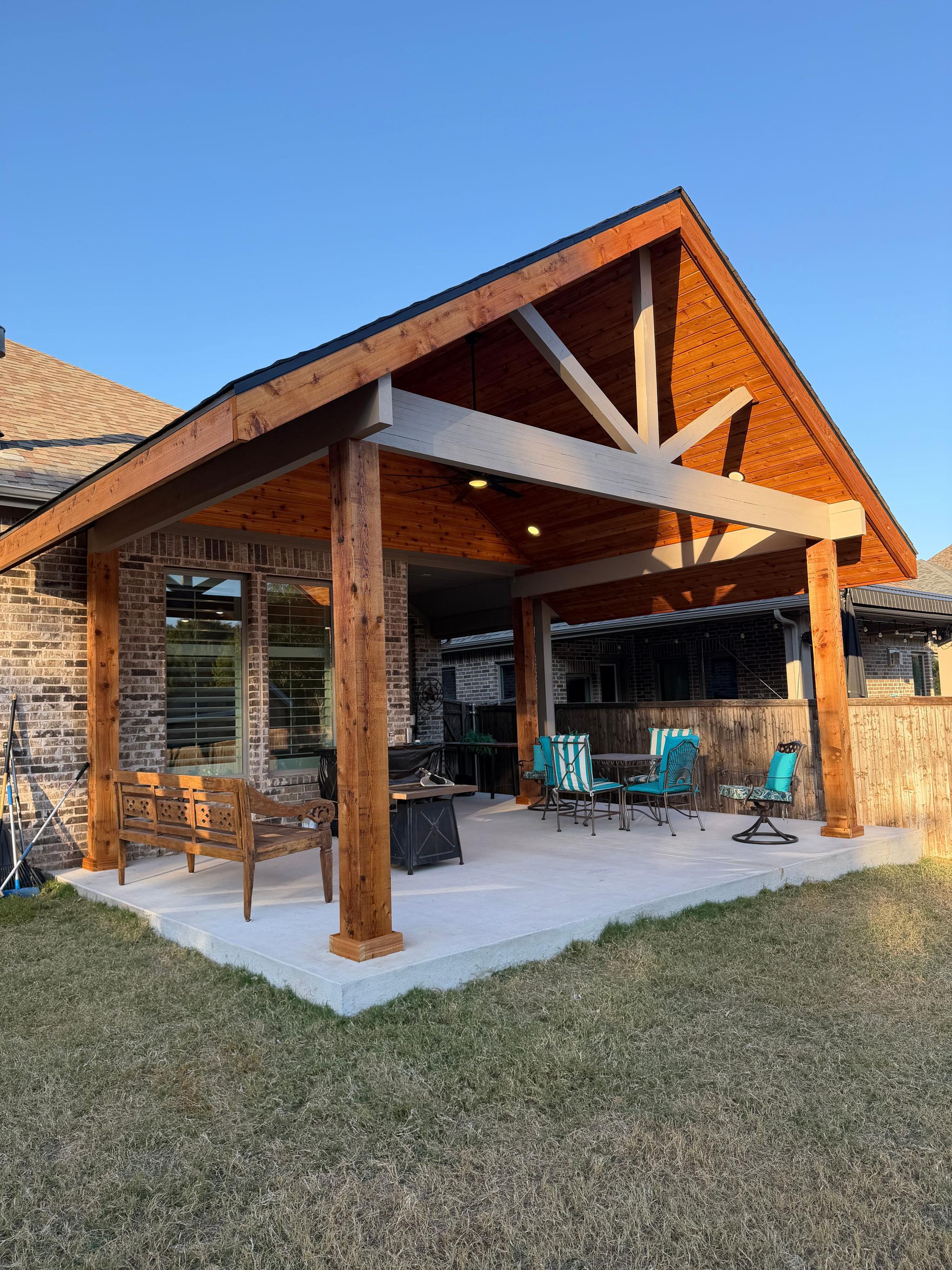
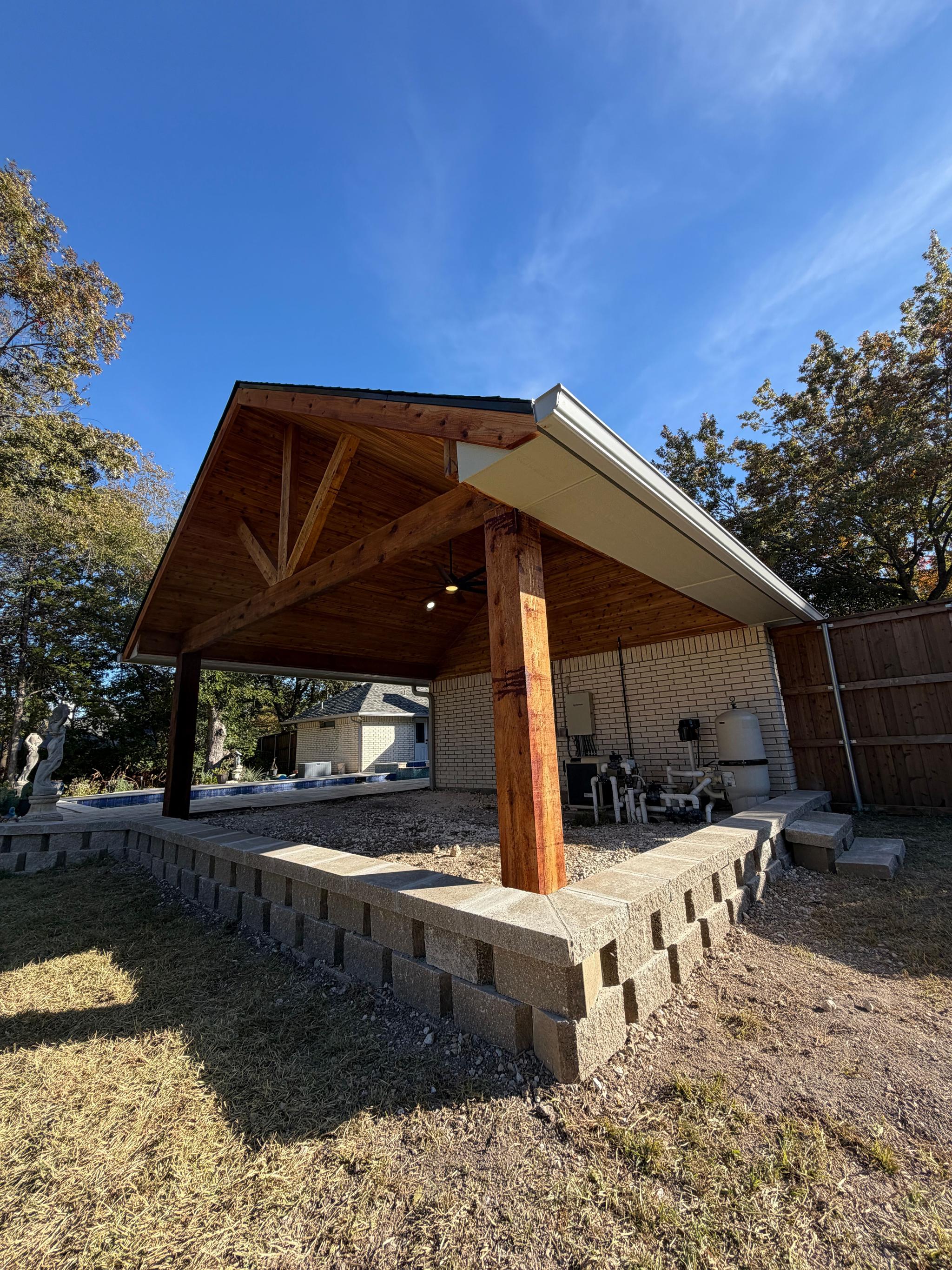
A solid-roof patio cover is an outdoor structure attached to your home (or built freestanding) with a shingle or metal roof that provides complete protection from sun and rain. Think of it as an extension of your roof over your patio.
Solid-roof patio covers come in several roof styles:
- Lean-to (shed style): A single-slope roof that attaches to your home's fascia and pitches away. The most affordable solid cover option.
- Gable: A peaked, two-slope roof that mirrors a traditional residential roofline. More expensive but significantly better-looking.
- Hip: A four-sided sloped roof. The most complex and refined design.
Most solid-roof patio covers in DFW are framed with cedar or treated pine, roofed with composition shingles that match the home, and supported by 6×6 posts (often wrapped in trim for a cleaner look). They're fully engineered, permitted, and built to handle North Texas wind loads.
For a deeper look at each style, see our complete guide to patio cover styles.
What Is a Polycarbonate Patio Cover?
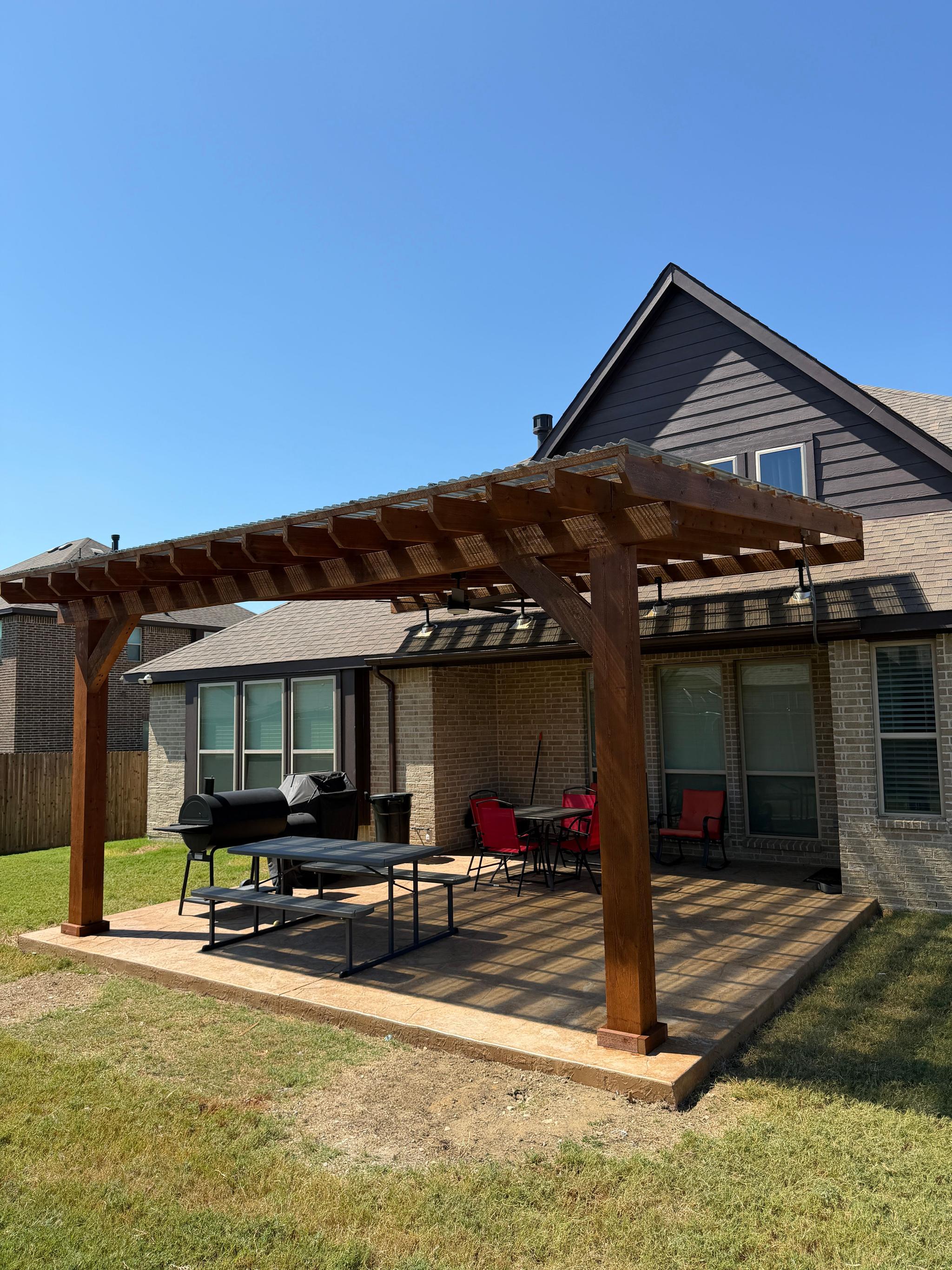
A polycarbonate patio cover is an open-beam outdoor structure — a series of posts, beams, and cross rafters — topped with translucent polycarbonate roofing panels. The panels sit on top of the rafters, allowing light through while blocking rain and most UV. The result is a bright, diffused light underneath rather than the full shade of a solid roof.
The lightest version of this same framework is the open-rafter patio cover: the same beams and cross rafters (sometimes with a lattice top) but no overhead covering at all. Sunlight filters through the rafters, creating a pattern of light and shadow, and it provides only partial shade. Many DFW homeowners start with an open-rafter cover and later add polycarbonate panels, shade sails, or a retractable canopy. A polycarbonate patio cover provides nearly as much rain and sun protection as a solid-roof cover, but with a different aesthetic.
The open-beam styles we commonly build include:
- Open-rafter: Classic look with exposed rafters and no overhead covering. Best for areas where you want some shade but still enjoy open sky.
- Polycarbonate roof: Translucent panels sit on top of the beams, allowing light through while blocking rain and most UV. This is one of our most popular builds.
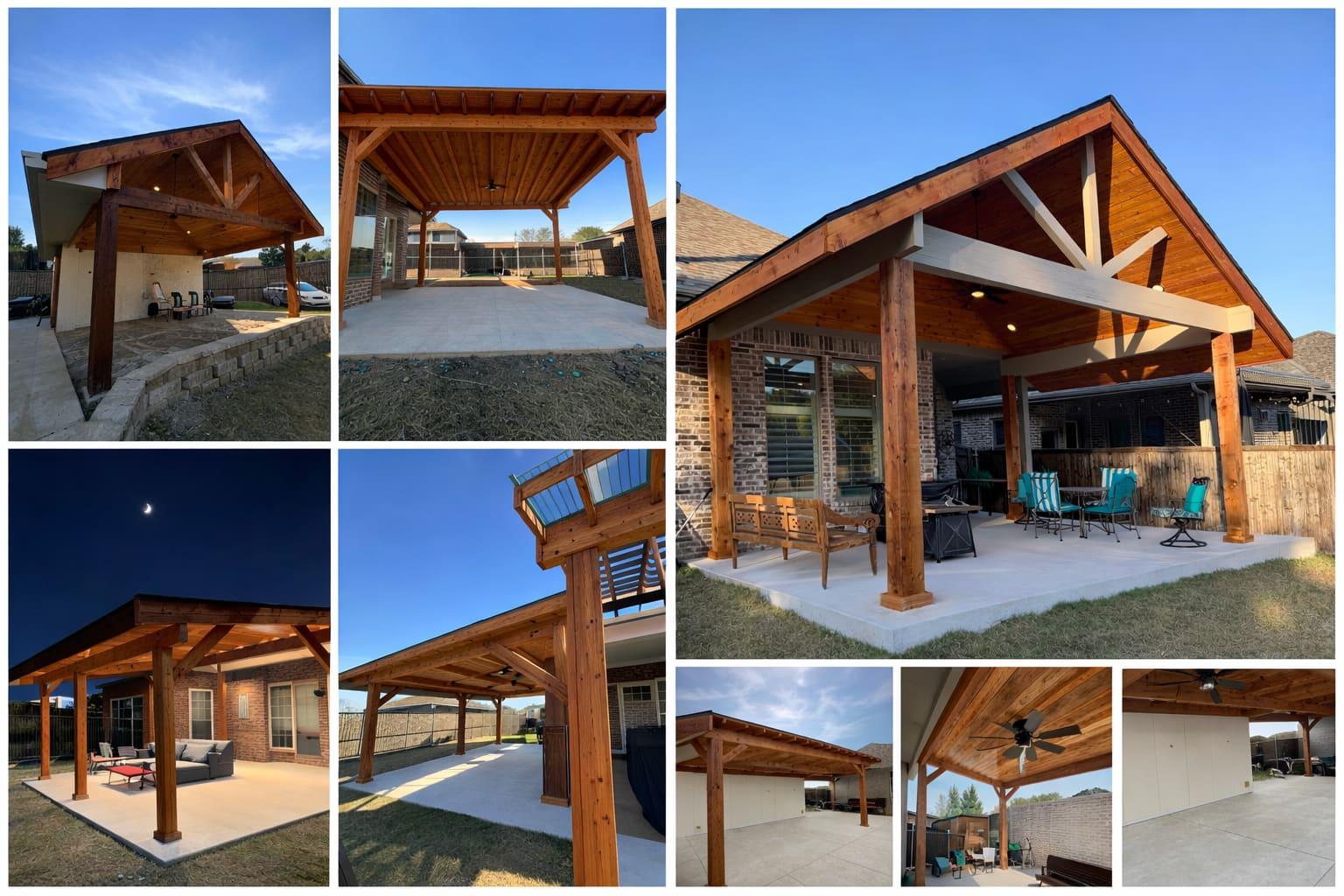
- Hybrid: An open-beam or polycarbonate section on one side transitioning into a solid-roof cover on the other. Great for L-shaped patios or multi-use outdoor spaces.
Key Differences at a Glance
| Feature | Solid-Roof Cover | Open-Rafter Cover | Polycarbonate Cover | |---|---|---|---| | Shade coverage | 100% — full shade | 30–50% — partial | 85–95% — nearly full | | Rain protection | Complete | None | Excellent (with proper slope) | | UV protection | Complete | Minimal | Good (blocks most UV) | | Hail protection | Yes (shingle/metal roof) | No | Limited (panels can crack in severe hail) | | Ceiling fan friendly | Yes | Possible but less effective | Yes | | Relative cost | Highest of the three | Lowest of the three | In between | | Maintenance | Moderate (re-stain/paint every 3–5 years) | Low (periodic stain) | Low (occasional panel cleaning) | | Permit required in DFW | Yes | Usually yes | Usually yes | | Curb appeal | Matches home architecture | Adds architectural interest | Modern/contemporary feel | | Light underneath | Shaded (can be dark) | Bright, filtered light | Bright, diffused light | | Best for | All-weather outdoor living | Decorative garden areas, partial shade | Modern outdoor living, entertaining |
Pros and Cons of Solid-Roof Patio Covers in Texas
Pros
Complete weather protection. This is the big one. A solid patio cover keeps you dry in a spring downpour, shaded during a 105°F August afternoon, and protected when a surprise storm rolls in. In North Texas, where weather can shift in 20 minutes, having a solid roof overhead means you can actually use your outdoor space reliably.
Usable in all seasons. With a solid cover, you can add a ceiling fan for summer airflow and a space heater or fire pit underneath for winter evenings. Your covered patio becomes a true three-season (or even four-season) room.
Matches your home's architecture. A well-built patio cover with shingles matching your roof looks like it was always part of the house. This matters for resale and for HOA approvals in communities across Frisco, McKinney, Allen, and Plano.
Protects outdoor furniture and electronics. If you have a TV, sound system, or high-end patio furniture, a solid cover protects those investments from UV damage, rain, and hail.
Higher ROI at resale. Real estate agents in DFW consistently report that covered patios are a top-three feature buyers look for. A well-executed patio cover can recoup 50–80% of its cost.
Cons
Higher upfront cost. A solid patio cover costs more than a basic open-rafter cover of the same footprint because of the roof deck, shingles, flashing, and extra framing it requires. If budget is the primary constraint, this matters.
Can feel enclosed. Depending on the height and design, a solid cover can make the space underneath feel darker or more closed-in, especially on smaller patios. Proper planning (adequate ceiling height, light-colored finishes, good lighting) mitigates this.
More complex construction. Solid covers require more engineering, heavier framing, and more labor. The build takes longer and involves more coordination with permit offices.
Pros and Cons of Polycarbonate and Open-Rafter Patio Covers in Texas
Pros
Lower cost. An open-rafter patio cover is the most affordable way to define an outdoor living space. With less material and simpler engineering, a 12×16 open-rafter cover can cost 30–40% less than a comparable solid cover. A polycarbonate cover lands in between.
Open, airy aesthetic. Open-beam covers create a sense of space without boxing you in. The interplay of light and shadow underneath is visually appealing, and you maintain a connection to the open sky — even with polycarbonate panels overhead, the space stays bright.
Design flexibility. These covers work well as standalone structures in the yard — over a fire pit, around a pool, or in a garden setting — where a solid roof would feel heavy or out of place.
Easier to add onto later. Starting with an open-rafter cover and later adding polycarbonate panels, shade fabric, or even converting to a solid roof is straightforward. It's a good "start small" option.
Less visual impact on the home. Some homeowners worry that a large solid structure will overwhelm their home's façade. An open-beam design is lighter and less visually dominant.
Cons
Minimal rain protection (open-rafter design). An open-rafter cover offers zero rain protection. If it starts raining during your barbecue, everyone's heading inside. In DFW, where pop-up storms are a way of life from March through October, this is a real limitation — and the main reason most homeowners choose the polycarbonate roof instead.
Limited shade (open-rafter design). Open rafters typically block only 30–50% of sunlight depending on beam spacing and orientation. During peak summer when the sun is directly overhead, you might get decent shade. But in the morning and late afternoon when the sun is lower, light streams in at angles the beams can't block. That matters in Texas.
Not ideal for electronics or sensitive furniture (open-rafter design). Without a roof overhead, anything underneath is exposed to UV, rain, and hail. You'll need weather-resistant furniture and should avoid mounting TVs or speakers.
Polycarbonate panels add cost and change the character. Once you add panels to get rain and UV protection, you've closed the cost gap with a solid cover significantly — and the resulting structure looks and feels different from the classic open-rafter aesthetic.
Which Is Better for Texas Weather?
Let's be blunt: DFW weather is hard on outdoor structures. Here's how each option holds up.
Heat
North Texas regularly sees 95–105°F from June through September. A solid patio cover blocks 100% of direct sunlight, reducing the temperature underneath by 15–25°F compared to exposed concrete. An open-rafter cover helps some — the beams cast shadows that shift throughout the day — but the thermal relief is modest. A polycarbonate patio cover splits the difference: it blocks most UV and heat while still allowing diffused light.
Winner: Solid-roof cover (but polycarbonate is close)
Rain
DFW gets approximately 37 inches of rain per year, much of it in heavy spring and early-summer storms. A solid patio cover keeps everything underneath dry. An open-rafter cover offers no rain protection at all. Polycarbonate panels perform well in rain, though you need proper slope and guttering to manage water runoff.
Winner: Solid-roof cover
Hail
North Texas is in one of the country's most active hail corridors. A patio cover with composition shingles or metal roofing handles hail the same way your home's roof does — it absorbs the impact and protects what's underneath. Polycarbonate panels can withstand moderate hail but may crack or dent in severe storms (individual panels are replaceable without rebuilding the structure). Open-rafter covers offer no hail protection.
Winner: Solid-roof cover (by a wide margin)
Wind
DFW gets regular 40–60 mph wind gusts during storm season. Solid-roof, polycarbonate, and open-rafter covers, when properly engineered and built to code, all handle these wind loads. Solid covers have more surface area for wind to act on, which is why engineering and proper connections matter more. Open-rafter covers let wind pass through, which is actually an advantage in extreme conditions.
Edge: Open-rafter cover (slightly, in extreme wind events)
Overall Weather Verdict
If you want a truly all-weather outdoor space in DFW, a solid-roof patio cover is the clear winner. If you're comfortable with less shade and a lighter structure, an open-beam cover works — especially with polycarbonate panels, which deliver rain protection and most of the UV blocking while keeping the space bright.
Cost Comparison
Here's how the three options compare on the main cost factors for a 12×16 structure in the DFW market:
| Cost Factor | Solid-Roof Cover (Gable) | Open-Rafter Cover (Cedar) | Polycarbonate Cover | |---|---|---|---| | Materials | Highest — full roof deck, shingles, and flashing on top of the framing | Lowest — beams and rafters only | Middle — rafters plus polycarbonate panels and mounting hardware | | Labor | Highest — roof framing, decking, and shingling | Lowest — the simplest framing | Middle — rafter framing plus panel installation | | Engineering + permits | Required; included in every Structure1 project | Required in most cities; included | Required in most cities; included | | Electrical (fan + lights) | Easiest to conceal in a finished ceiling | Exposed conduit or routed through beams | Routed through beams beneath the panels |
Notice that once you add polycarbonate panels and electrical to an open-beam structure, the price gap with a solid cover narrows considerably. At that point, many homeowners decide the extra investment in a solid cover is worth the complete weather protection and more traditional aesthetic.
For a full breakdown of what drives patio cover cost, see our DFW patio cover cost guide.
Which Should You Choose?
There's no universally "better" option. The right choice depends on your priorities. Here's a framework we use with homeowners:
Choose a solid-roof patio cover if:
- You want to use the space rain or shine, year-round
- You plan to mount a TV, hang a fan, or install lighting
- Your HOA requires structures that match your home's roofline
- You want maximum resale value impact
- You live in an area with frequent hail (most of DFW)
- You want to protect outdoor furniture, electronics, or a full outdoor kitchen
Choose an open-rafter patio cover if:
- You want a more open, garden-like aesthetic
- Budget is your primary constraint
- The space is secondary (a fire pit area, garden seating, pool surround) rather than your primary outdoor living area
- You want the option to add coverage later
- The structure will be freestanding (away from the house) where a solid roof would look heavy
Choose a polycarbonate patio cover if:
- You want rain protection with a modern, light-filled feel
- You like the open-beam aesthetic but can't tolerate getting rained on
- Your budget falls between a basic open-rafter cover and a full solid-roof cover
- The space will be used for entertaining where natural light matters
Still not sure?
That's completely normal — most homeowners go back and forth before deciding. The best thing you can do is talk through your specific space, budget, and goals with someone who's built both. At Structure1, we build solid-roof, polycarbonate, open-rafter, and hybrid patio covers across Dallas-Fort Worth, so we can walk your yard and show you what each option looks like in your specific setting.
Can You Convert an Open-Beam Cover to a Solid Roof Later?
Yes, but it's not as simple as "just adding a roof." Converting an open-rafter or polycarbonate cover to a solid-roof cover typically requires:
- Reinforcing or replacing the existing beams and posts to handle the added roof load
- Adding a ridge beam or rafter system
- Installing roofing material, flashing, and tie-ins to your home
- Updating the engineering plans and pulling a new permit
The cost to convert is usually 60–80% of what it would have cost to build a solid cover from scratch. So while it's possible, it's more cost-effective to build the right structure the first time. If there's any chance you'll want a solid roof eventually, we'd recommend either going with a solid-roof patio cover now or building an open-beam cover that's engineered to support a future roof addition.
What We Recommend for Most DFW Homeowners
After building 150+ outdoor structures across Dallas-Fort Worth over the past four years, here's our honest take:
For primary outdoor living spaces — the area right off the back door where you eat, watch TV, and entertain — a solid-roof patio cover is almost always the better investment in Texas. The sun is too intense and the rain too unpredictable for an open structure to serve as your main outdoor room.
For secondary spaces — a seating area by the pool, a garden retreat, or an accent structure over a fire pit — an open-rafter or polycarbonate cover is often the better choice. It defines the space beautifully without the cost and visual weight of a solid roof.
For homeowners who want the best of both worlds, a combination build — solid cover over the main area with an open-rafter or polycarbonate extension for the secondary zone — delivers tremendous value and visual interest. These are some of our favorite projects to design and build.
Check out examples of all three approaches on our projects page, or explore our full range of patio cover services.
Get Help Deciding — Free Consultation
Not sure which direction to go? We get it. Get a free estimate and we'll come out, look at your space, and walk you through the options with real pricing. No pressure, no sales pitch — just honest advice from a team that builds these structures every week.
Call us at (580) 665-2758 or fill out the form on our website at structure1builds.com.