Your backyard has potential — you just need the right structure to unlock it. Whether you're starting with a bare concrete slab or a half-used patio that's too hot to enjoy six months out of the year, the right patio cover design can completely transform how you use your outdoor space.
We've built over 150 patio covers across Dallas-Fort Worth, and no two projects are exactly alike. Different lot sizes, home styles, budgets, and lifestyles all point to different solutions. This guide walks you through 15 of the most popular and effective patio cover designs we've built or consulted on in the DFW area — with real details on what each option involves, what it costs, and who it's best for.
Use these ideas as a starting point. When you're ready to see what would work in your specific backyard, we're happy to give you a free consultation and estimate.
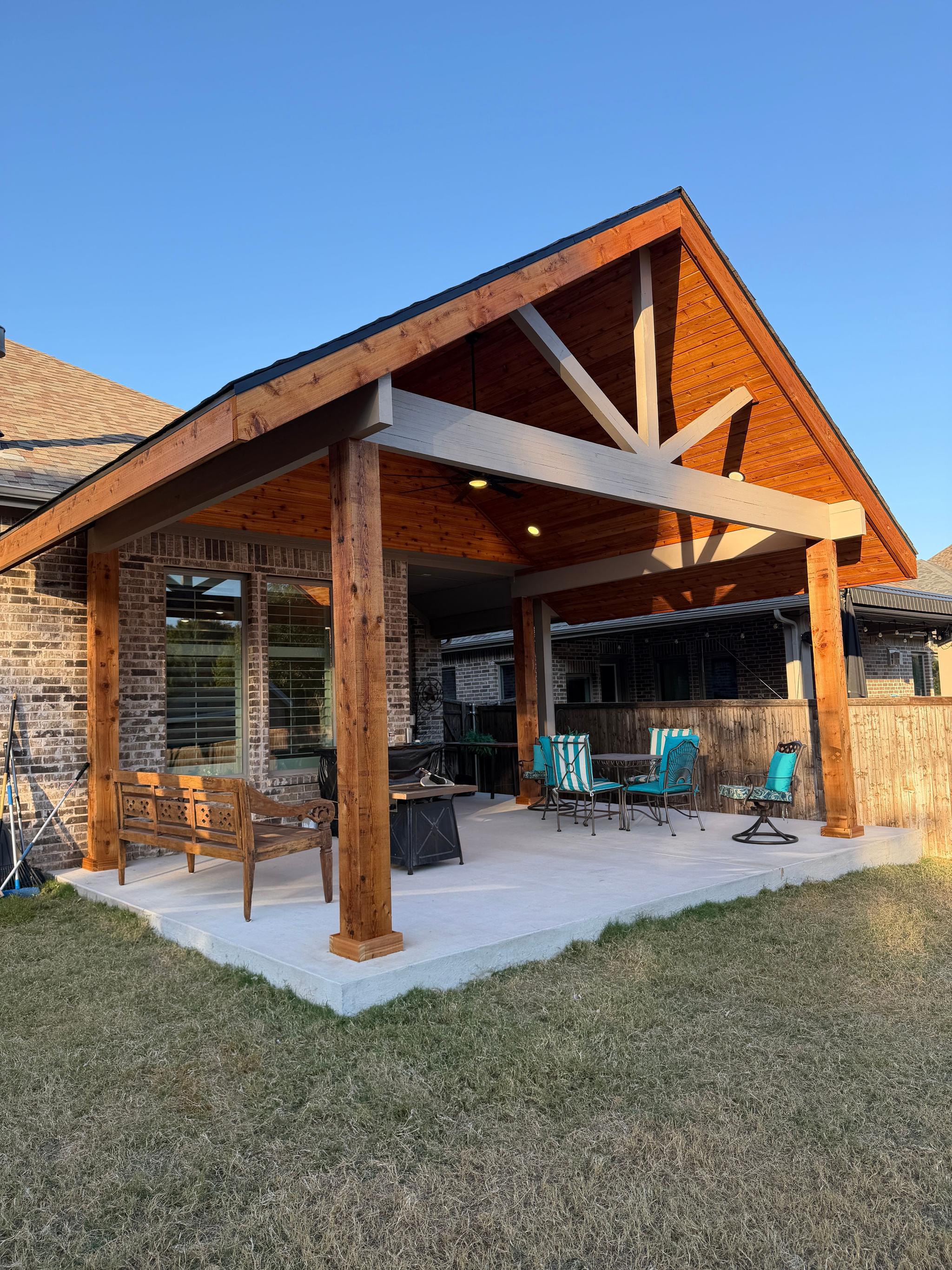
1. Classic Gable Patio Cover
The gable design is the gold standard for attached patio covers in North Texas. It features a peaked roofline — the same A-frame shape as most DFW home roofs — which gives it a built-in, architectural look that appears to be part of the original house.
Key features:
- Ridge beam running the length of the cover with rafters sloping down to both sides
- Typically matches existing roof pitch and shingle color
- Cedar or pressure-treated posts with decorative bases
- Option for tongue-and-groove cedar ceiling
- Room for ceiling fans, recessed lighting, and electrical outlets
Why DFW homeowners love it: The gable style looks like it's always been there. When built with matching shingles and complementary trim, it raises the perceived quality of the entire backyard. It also provides excellent headroom at the center ridge.
Cost drivers: Footprint, roof pitch and truss detail, matched shingles, and the fan and lighting package.
This is the most popular style we build at Structure1. For a deeper look at how gable covers compare to other styles, check out our complete guide to patio cover types.
2. Modern Lean-To with Dark-Stained Ceiling
The lean-to (or shed-style) cover attaches to your home and slopes away at a single pitch. While simpler than a gable, a lean-to done right is anything but basic. The modern version we build frequently features dark-stained cedar with a tongue-and-groove ceiling that creates a dramatic contrast against lighter home exteriors.
Key features:
- Single-slope roof attaching at the home's fascia or wall
- Dark walnut or espresso stain on cedar beams and ceiling
- Clean, modern lines without decorative brackets
- Architectural shingles or standing seam metal roofing
- Integrated lighting with a clean, recessed look
Why it works: The dark stain trend has exploded in DFW over the last few years. It gives a lean-to cover a contemporary, high-end feel that pairs beautifully with gray, white, or brick exteriors. The simplicity of the lean-to line actually becomes an asset when the finish is this polished.
Cost drivers: Footprint, the quality and number of coats of the dark stain, and whether the ceiling is finished.
3. Polycarbonate Patio Cover
A patio cover with polycarbonate roofing panels gives you the best of both worlds — the open, airy aesthetic of an open-rafter cover with genuine rain and UV protection. Multi-wall polycarbonate panels filter light rather than blocking it, creating a bright but comfortable space underneath.
Key features:
- Open rafter design with polycarbonate panels installed between or on top of rafters
- Panels available in clear, opal (frosted), or bronze tint
- Filtered natural light throughout the day
- Rain protection without the enclosed feel of a solid roof
- Cedar or pressure-treated structure
Why it works: Many homeowners want shade and rain coverage but don't want their patio to feel like a dark room. Polycarbonate panels solve this. They block 99% of UV rays while letting soft, diffused light through. In DFW's climate, the opal (frosted) tint is most popular because it provides the best balance of light and heat reduction.
Cost drivers: Footprint, panel grade and tint, and any electrical routed through the beams.
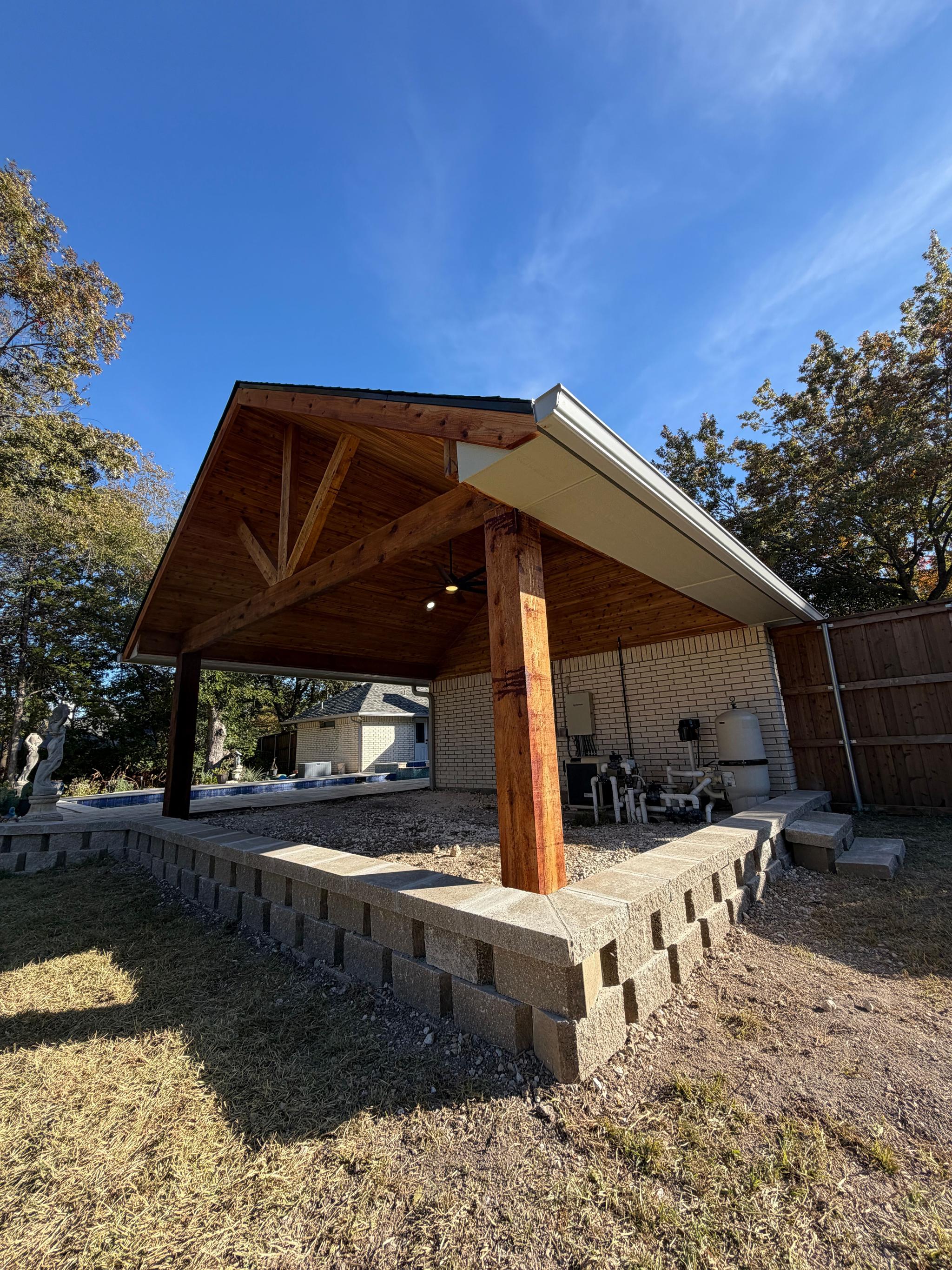
4. Freestanding Modern Patio Cover
Not every patio cover needs to attach to the house. A freestanding patio cover can be positioned anywhere in the yard — over a fire pit area, beside a pool, or in a garden space. The modern freestanding design uses clean lines, minimal ornamentation, and bold stain colors.
Key features:
- Four or more posts with no attachment to the home
- Open rafter design or polycarbonate panel roof
- Positioned independently in the yard for flexible placement
- Cedar construction with modern stain finishes
- Option for string lights, fans, or curtain tracks
Why it works: Freestanding covers are ideal when your home's architecture doesn't accommodate an attached structure, when you want a covered space away from the house, or when local setback requirements prevent building close to the property line near the home. They're also popular as pool-adjacent shade structures.
Cost drivers: Four independent footings instead of a house attachment, roof style, size, and the distance from the home for any electrical run.
5. Gable Cover with Ceiling Fan and Lighting
This is the upgraded version of the classic gable — the one we recommend to homeowners who plan to use their covered patio as a true outdoor room. Adding a ceiling fan and lighting transforms a shade structure into a space you'll actually use on 100°F August evenings.
Key features:
- Standard gable structure with electrical rough-in
- One or two ceiling fans rated for damp/wet locations
- Recessed can lights or flush-mount fixtures
- Switched outlet for additional accessories
- GFCI-protected receptacles along posts for string lights or speakers
Why it works: A covered patio without electrical is like a living room without lamps. You can sit under it during the day, but once the sun sets or the temperature climbs, the space becomes unusable. Adding a fan and lights extends your usage by several hours per day during summer and makes the space functional after dark year-round. The electrical adds to the project cost, but it arguably doubles the space's value.
Cost drivers: Footprint, number of fans and fixtures, outlet count, and the distance from your electrical panel to the cover.
6. Patio Cover with Privacy Back Wall
Privacy is a real concern in DFW suburban neighborhoods where houses are 15–30 feet apart. A patio cover with a solid back wall — typically built with tongue-and-groove cedar boards or composite panels — provides screening from neighbors while maintaining an open front and sides.
Key features:
- Standard open-rafter or lean-to structure
- Full-height solid wall on one or two sides
- Cedar tongue-and-groove or vertical board construction
- Can incorporate a mounted TV, shelving, or decorative elements on the wall surface
- Optional polycarbonate or solid roof
Why it works: The back wall does triple duty: it blocks the neighbor's view, stops prevailing winds from blowing through, and provides a finished surface for mounting a TV or hanging décor. We've built this style in subdivisions across Midlothian, Mansfield, and Arlington where lot-to-lot spacing is tight.
Cost drivers: How much wall you enclose, the siding or cladding you choose, and the size of the structure.
7. Custom Carport with Decorative Brackets
A carport might not sound glamorous, but a well-designed carport built with the same cedar construction and craftsmanship as a patio cover adds genuine curb appeal while protecting vehicles, boats, or RVs. Decorative brackets, stained wood, and matching roof lines elevate it beyond the basic metal carport.
Key features:
- Cedar or pressure-treated post-and-beam construction
- Decorative corner brackets or knee braces
- Shingle or metal roof to match the home
- Sized for one or two vehicles, or oversized for boats/RVs
- Concrete pad or pavers underneath (if not existing)
Why it works: Standard metal carports are eyesores. A wood-framed carport that matches your home's exterior looks intentional and can actually add to curb appeal. This is a popular option in rural DFW communities where HOAs are less restrictive and homeowners need covered parking for equipment, trailers, or recreational vehicles.
Cost drivers: The clear span and height needed for vehicles, roof style, and the amount of decorative bracket work.
8. Covered Outdoor Kitchen Space
This is the DFW dream project — a patio cover designed specifically to shelter an outdoor kitchen area. The cover provides rain and sun protection for the grill, countertops, and seating area while keeping the cooking experience open-air.
Key features:
- Sized and positioned to cover a built-in grill, countertop, and adjacent dining area
- Higher ceiling height near the grill for ventilation and clearance
- Electrical for lighting, outlets, and hood vent (if applicable)
- Fire-resistant materials near the cooking zone
- Often combined with a separate seating-area cover
Why it works: An outdoor kitchen without a cover is a bad investment in DFW — rain stops the party, and direct summer sun makes cooking miserable. The patio cover makes the kitchen usable year-round and protects your investment in cabinetry, countertops, and appliances.
Cost drivers: Footprint, vent-hood and gas/electrical provisions built into the cover, and ceiling finish (not including the kitchen build-out).
9. Extended Patio Cover Over Pool Area
If you have a pool, you know the concrete decking surrounding it can be blindingly hot. An extended patio cover — either attached to the home or freestanding near the pool — provides shaded space for lounging, toweling off, and supervising kids without baking in direct sun.
Key features:
- Positioned to shade the seating area adjacent to the pool
- Elevated height to maintain open sightlines to the pool
- Weather-resistant materials and hardware rated for high-moisture environments
- Polycarbonate panels popular here for maintaining light while blocking UV
- Designed with pool code setbacks in mind
Why it works: Poolside shade is one of the most requested features from DFW homeowners with existing pools. A well-placed cover transforms the pool area from "swim and run back inside" to "spend the entire afternoon out here." It also dramatically reduces how hot the adjacent concrete gets.
Cost drivers: Configuration, span across the pool deck, footing locations around existing concrete, and electrical.
10. Open-Rafter Cedar Cover with String Lights
Sometimes simplicity wins. A clean open-rafter cedar cover with integrated string light hooks and a warm stain creates an inviting atmosphere that's perfect for evening entertaining without the cost of a full solid-roof structure.
Key features:
- Open-rafter cedar structure with sanded and stained finish
- Eye hooks or cable runs for commercial-grade string lights
- Electrical outlet at one or more posts for light connections
- Warm honey or natural cedar stain
- Optional climbing plants or vine support
Why it works: String lights on an open-rafter cover create the kind of ambiance you see at upscale restaurants and boutique hotels. It's a relatively affordable way to make your backyard feel like a destination. This style is especially popular with younger homeowners and families who entertain frequently.
Cost drivers: Footprint, cedar beam size and rafter spacing, and the outlets and circuits for the lighting.
11. Hip Roof Patio Cover
A hip roof cover has slopes on all four sides rather than just two (gable) or one (lean-to). It's a more complex and refined design that works particularly well on homes that already have a hip roof — creating a seamless visual extension.
Key features:
- Four-sided sloped roof with no vertical gable ends
- More complex framing requiring experienced carpentry
- Excellent wind resistance due to lower profile and all-sided slope
- Premium appearance that reads as custom architecture
- Typically requires ridge vent or other ventilation solutions
Why it works: If your DFW home has a hip roof (common in many newer subdivisions), a gable patio cover can look visually disconnected. A hip roof cover maintains architectural consistency and has the added benefit of handling wind loads better — a real advantage in North Texas storm season.
Cost drivers: Hip framing takes more engineering and cutting than a gable, so labor is the main premium, along with footprint and roofing.
12. Patio Cover with Stamped Concrete Base
Why just cover the patio when you can upgrade the surface underneath at the same time? Combining a new patio cover with a stamped concrete patio creates a complete outdoor living transformation in a single project.
Key features:
- New patio cover (any style) built in conjunction with a new concrete patio
- Stamped concrete in patterns like ashlar slate, random stone, or wood plank
- Color-matched stain and sealer to complement the cover's stain and trim
- Single contractor manages both the concrete and the cover
- Proper drainage slope integrated into the pour
Why it works: When you build the cover and pour the concrete together, everything aligns perfectly — post footings integrate into the slab design, drainage works as a system, and the colors and finishes coordinate. Doing these as separate projects months apart often results in a disconnected look and higher total cost.
We handle both patio covers and concrete work in-house, so we can design and build the complete package. Check out our concrete services for stamped concrete options.
Cost drivers: The size of both the cover and the slab, the stamp pattern and color, and sequencing the two trades together.
13. Louvered Patio Cover for Adjustable Shade
Louvered patio covers feature rotating slats that can be angled open for full sun, partially closed for filtered light, or fully closed for complete shade and rain protection. They offer the ultimate in flexibility.
Key features:
- Motorized or manual-adjust louvers on top of the cover frame
- Fully open position mimics an open-rafter cover
- Fully closed position provides solid rain protection
- Available in aluminum (most common) or wood frame with aluminum louvers
- Remote control operation on motorized systems
Why it works: Louvered systems are ideal for homeowners who want maximum control over their outdoor environment. Open the louvers on a pleasant spring morning for full sun. Close them when the afternoon thunderstorm rolls in. The flexibility is the selling point. The trade-off is cost — louvered systems run significantly higher than fixed-roof structures.
Cost drivers: Size, whether the louvers are manual or motorized, and the manufacturer's system. Louvered covers sit at the top of the cost scale.
14. Two-Tone Stained Cedar Cover
A two-tone stain approach uses a darker color on the posts and beams with a lighter tone on the ceiling, or vice versa. This technique adds visual depth and architectural interest to an otherwise standard patio cover design.
Key features:
- Cedar construction with two complementary stain colors
- Common combos: dark walnut posts with natural cedar ceiling, or espresso beams with honey-toned rafters
- Requires careful masking during the staining process
- Works on any cover style — gable, lean-to, or open-rafter
- Stain should be high-quality exterior-grade with UV protection
Why it works: A single stain color can look flat on a large structure. Two-tone staining creates definition between structural elements and ceiling surfaces, giving the cover a designer look that stands out. It's one of those upgrades that costs relatively little in materials (you're buying two cans of stain instead of one) but creates a dramatic visual difference.
Cost drivers: Additional stain labor for masking and applying the second color, a small addition relative to the whole project.
15. Full Backyard Transformation
This is the project where everything comes together — a patio cover, new concrete, lighting, a privacy wall, and thoughtful design that turns an underused backyard into a complete outdoor living area. It's the most ambitious option on this list and the one with the biggest impact on how you live in your home.
Key features:
- Combination patio cover (often gable or hip roof) with full electrical package
- New stamped or brushed concrete patio with proper drainage
- Privacy wall on one or more sides
- Ceiling fans, recessed lighting, and switched outlets
- Designed as a cohesive project rather than piecemeal additions
- May include outdoor kitchen prep area, fire pit zone, or seating walls
Why it works: The full backyard transformation is what happens when a homeowner decides to commit to outdoor living as a core feature of their home. Rather than adding one element at a time over several years, everything is designed, permitted, and built together — which means it looks cohesive, functions as a system, and costs less than doing it incrementally.
We build these projects from start to finish as a single scope. View examples of complete builds in our project gallery.
Cost drivers: Overall scope: cover size and style, concrete square footage, kitchen or fire feature, and electrical.
Ready to Build Your Dream Patio Cover?
These 15 ideas cover a wide range of budgets, styles, and complexity levels. Whether you're drawn to a simple open-rafter cedar cover with string lights or a full backyard transformation with a gable cover, stamped concrete, and a privacy wall, the right starting point is a conversation about your space, your budget, and how you want to use your backyard.
Here's how to take the next step:
- Browse our work. Check out our completed projects to see real examples of patio covers and outdoor spaces we've built across DFW.
- Understand your options. Read our guides on patio cover types, material choices, and what determines patio cover cost in DFW to get informed before your consultation.
- Get your free estimate. Contact Structure1 Construction for a free, no-pressure consultation. We'll visit your property, discuss your vision, and provide a detailed estimate. Call us at (580) 665-2758 or fill out our online form — we typically respond within 24 hours.
We've been building custom patio covers across Dallas-Fort Worth for over 4 years, with 150+ completed projects and a 2-year workmanship warranty on every build. Licensed, insured, and ready to make your backyard the best room in your house.