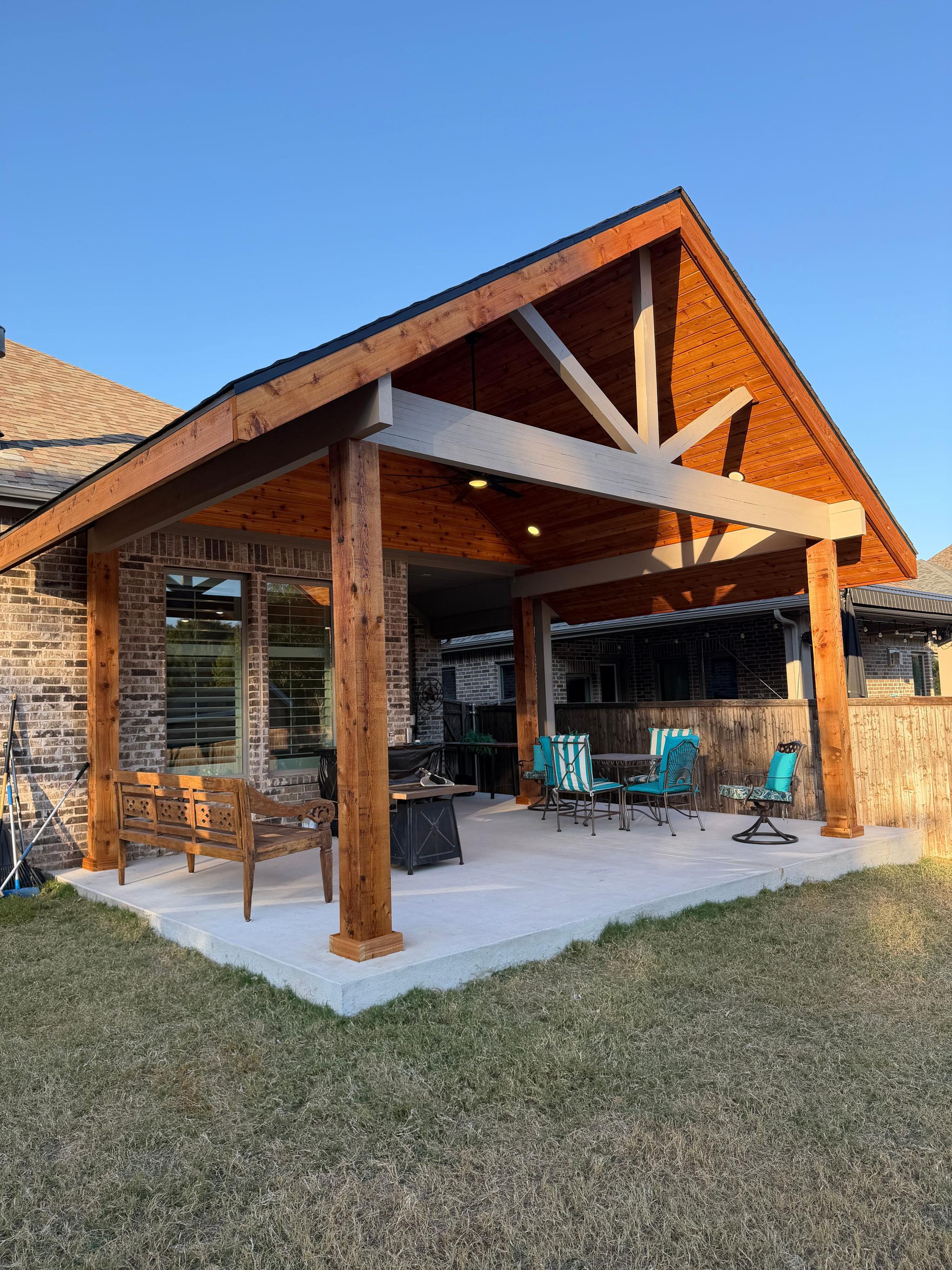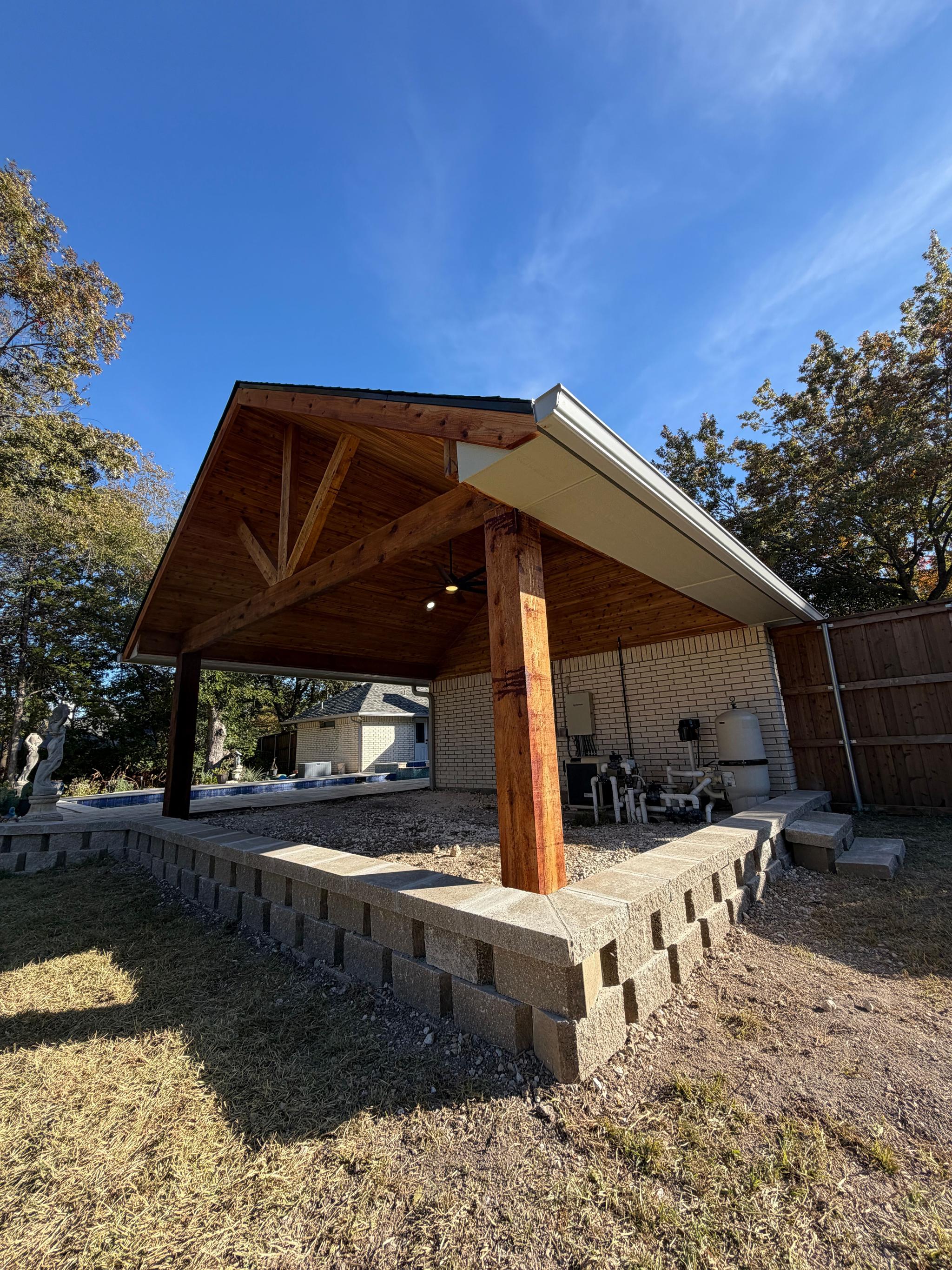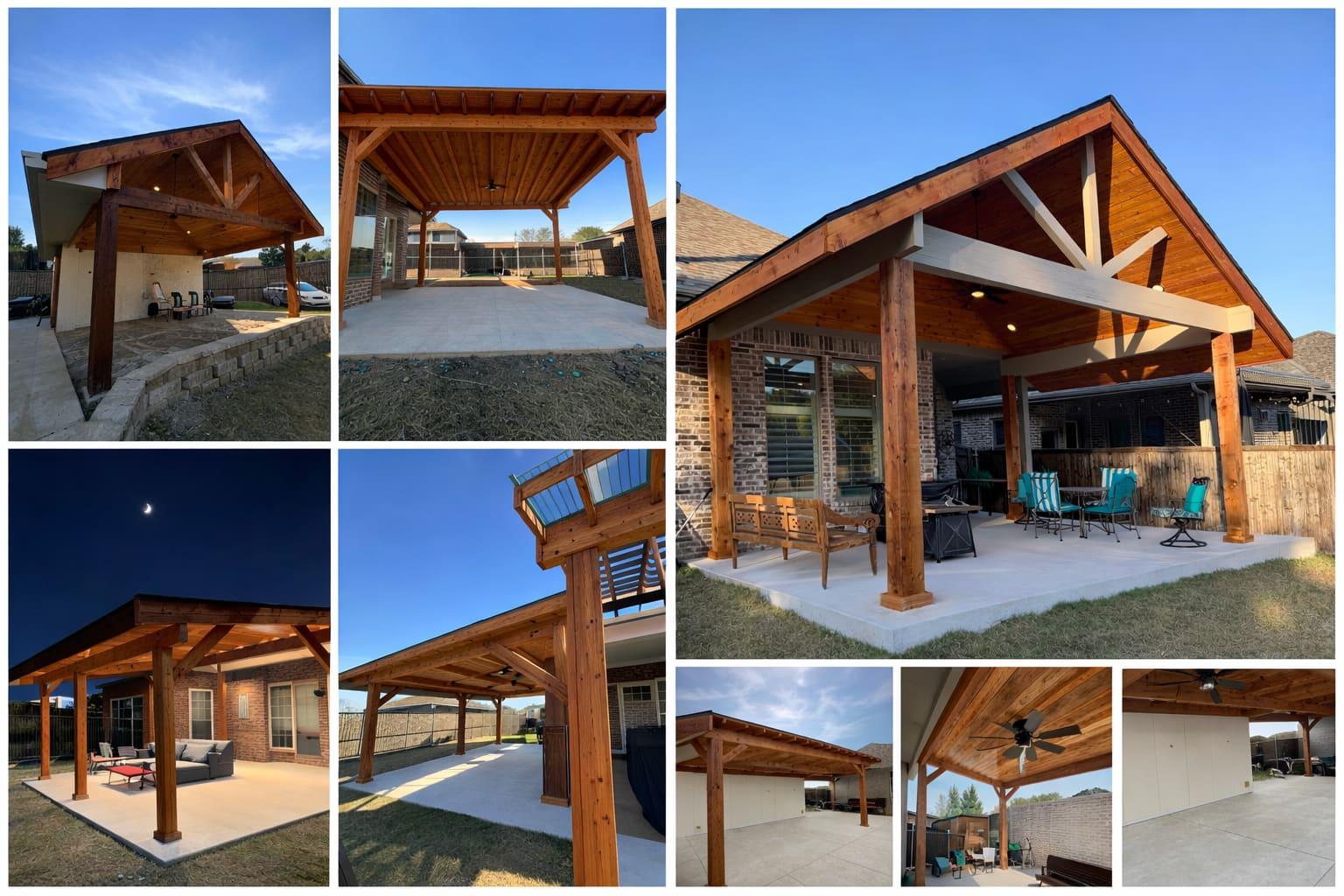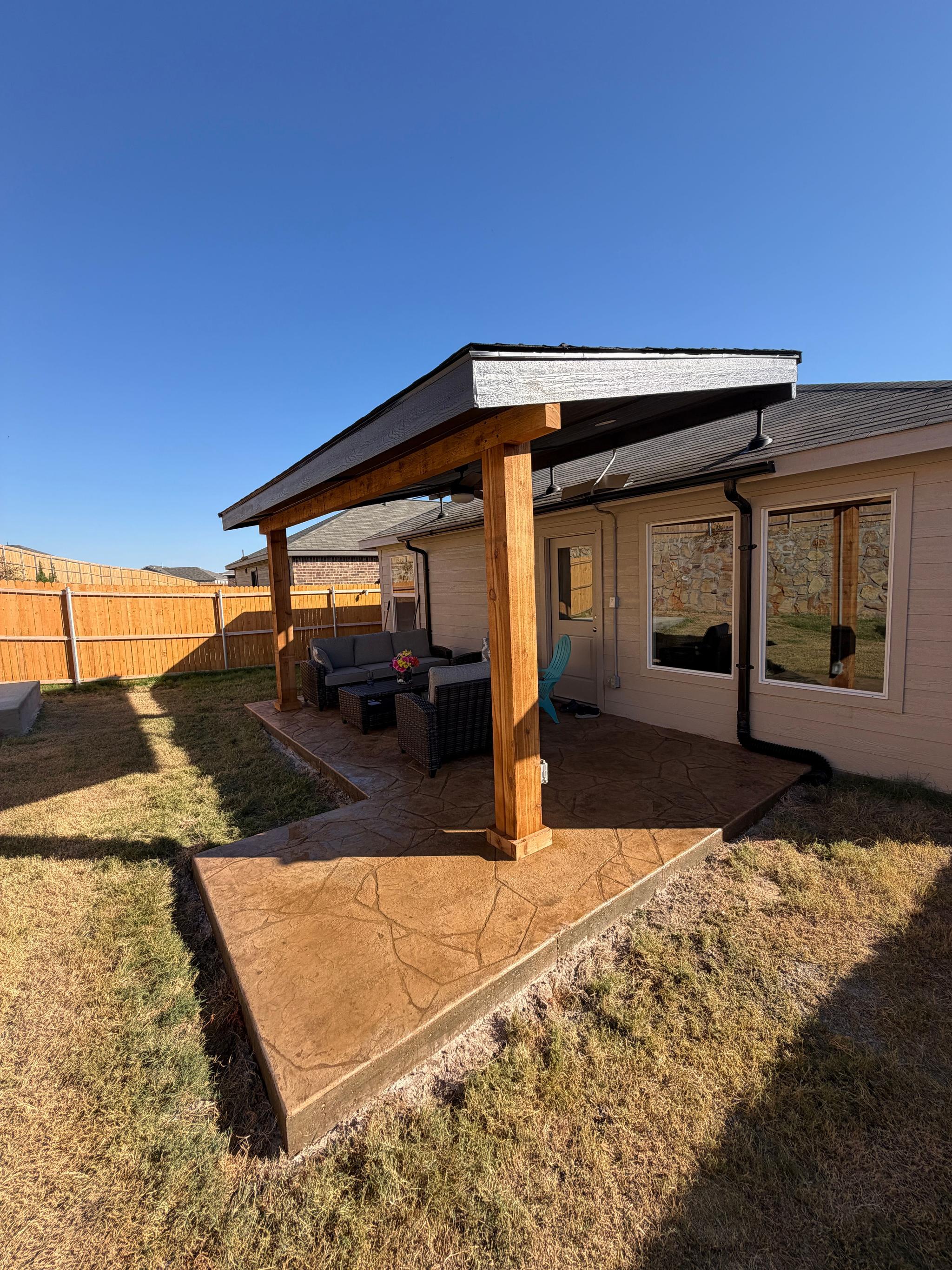
One of the first questions homeowners ask when planning a patio cover project in Dallas-Fort Worth is: Do I actually need a permit for this?
The short answer is yes — virtually every city in the DFW metroplex requires a building permit for patio cover construction. The longer answer is that the specific requirements, fees, timelines, and processes vary significantly from one city to the next. What takes five days to approve in one city might take five weeks in another.
This guide covers the permit requirements for the major cities across the DFW metroplex so you know what to expect before your project begins. And if the permitting process sounds like a headache — it can be — we'll explain how Structure1 handles it all for you.
Do Texas Cities Require Permits for Patio Covers?
Yes. Under the International Residential Code (IRC), which Texas has adopted, any structure that's attached to your home or that affects the structural integrity of your property requires a building permit. Patio covers — whether attached or freestanding — fall under this requirement in nearly every DFW municipality.
The permit process ensures that:
- The structure is designed to handle Texas wind loads (typically 90–115 mph depending on the jurisdiction)
- Footings are deep enough for the local soil conditions (DFW has expansive clay soil, which requires specific foundation depth)
- The structure doesn't encroach on utility easements or violate setback requirements
- Electrical work (fans, lights, outlets) meets code
- The roof tie-in to your existing home (for attached covers) is properly flashed and sealed
Even freestanding open-rafter patio covers often require permits in DFW cities, though the requirements may be slightly less stringent than for attached solid-roof covers. The threshold varies — some cities exempt structures under a certain square footage (typically 120 sq ft or less), while others require permits for any roofed structure regardless of size.
What You'll Need for a Permit Application
While specifics vary by city, most DFW permit offices require:
- Engineered construction plans — stamped by a licensed Texas professional engineer (PE). These include framing details, connection specifications, load calculations, and foundation requirements.
- Site plan / plot plan — showing where the structure will sit on your property relative to lot lines, easements, and other structures.
- Product specifications — manufacturer specs for roofing materials, post bases, connectors, and fasteners.
- HOA approval (if applicable) — some cities won't issue a permit until you provide written HOA approval.
- Permit application form and fees.
At Structure1, we prepare all of these documents as part of every project. Our engineer draws the plans, we compile the specifications, and we submit and manage the permit application. You don't have to visit city hall, wait on hold with the building department, or figure out what IRC section applies to your project.
Dallas Patio Cover Permit Requirements
The City of Dallas processes patio cover permits through its Building Inspection division. Dallas is one of the larger and more established permit offices in DFW, which means the process is well-organized but can be slower due to volume.
Key details:
- Permit required: Yes, for all attached and freestanding patio covers.
- Engineered plans required: Yes. Dallas requires stamped engineered drawings for any structure attached to a residence.
- Permit fee: Varies with the project's declared valuation. Structure1 includes the permit and engineered plans in every project.
- Review timeline: 10–20 business days for residential plan review. Express review is sometimes available for an additional fee.
- Inspections: Dallas typically requires a footing/foundation inspection before concrete is poured and a framing/final inspection before the project is closed out.
- Setback requirements: Structures must meet the setback requirements of the applicable zoning district. In most single-family residential zones, this means 5 feet from side property lines and 5–10 feet from the rear property line. Attached covers on corner lots may have additional street-side setback requirements.
Dallas-specific notes: Dallas has been moving more of its permit process online, which has improved turnaround times for residential projects. If your property is in a historic district or overlay zone, additional review by the Landmark Commission may be required, which adds 2–4 weeks.
Fort Worth Patio Cover Permit Requirements
Fort Worth's Development Services department handles residential construction permits. Fort Worth tends to be slightly faster than Dallas for straightforward residential projects.
Key details:
- Permit required: Yes.
- Engineered plans required: Yes, for attached covers and any freestanding structure over 200 square feet.
- Permit fee: Varies with the project's declared valuation; included in every Structure1 project.
- Review timeline: 7–15 business days for most residential patio cover projects.
- Inspections: Foundation and final inspections are standard.
- Setback requirements: Vary by zoning district. Most residential zones require 5-foot side setbacks and 5-foot rear setbacks for accessory structures.
Fort Worth-specific notes: Fort Worth has a relatively efficient online portal for permit applications. The city also allows some over-the-counter permits for simpler structures, which can reduce the timeline to as little as 1–3 business days for straightforward lean-to covers.
Frisco Patio Cover Permit Requirements
Frisco is one of the fastest-growing cities in DFW, and its building department reflects that growth — they're busy. Frisco also has some of the stricter residential construction standards in the metroplex, partly driven by the high volume of HOA-governed communities.
Key details:
- Permit required: Yes, for all patio covers.
- Engineered plans required: Yes. Frisco is strict about requiring PE-stamped drawings with full structural calculations.
- Permit fee: Varies with the project's declared valuation; included in every Structure1 project.
- Review timeline: 10–25 business days. Frisco's plan review can be thorough, especially for larger or more complex structures.
- Inspections: Foundation, framing, and final inspections. Frisco inspectors are known for being detail-oriented.
- Setback requirements: Typically 5 feet from side property lines and 10 feet from the rear. Some Frisco subdivisions have more restrictive setbacks written into the plat.
Frisco-specific notes: If you live in a Frisco HOA community (and most Frisco homeowners do), you'll need HOA architectural approval before submitting your permit application. Frisco's building department doesn't always enforce this, but your HOA certainly will — and building without HOA approval can result in fines or a forced removal order. We always recommend getting HOA approval first.
McKinney Patio Cover Permit Requirements
McKinney has experienced rapid growth over the past decade, and the city's building department has expanded to keep pace. McKinney's process is generally straightforward and faster than Frisco for most residential projects.
Key details:
- Permit required: Yes.
- Engineered plans required: Yes for attached structures. Freestanding covers under 200 square feet may have reduced requirements.
- Permit fee: Varies with the project's declared valuation; included in every Structure1 project.
- Review timeline: 7–15 business days.
- Inspections: Foundation and final, with framing inspection added for larger structures.
- Setback requirements: Standard 5-foot side and rear setbacks in most residential zones, though specific plats may have different requirements.
McKinney-specific notes: McKinney has a growing number of master-planned communities with their own design guidelines. Communities in west and northwest McKinney (near US-380 and the tollway) tend to have stricter architectural review processes. We've built extensively in McKinney and know the common HOA requirements for most major subdivisions.
Plano Patio Cover Permit Requirements
Plano is a mature, well-established city with a professional building department. Permit processing in Plano is generally efficient and predictable.
Key details:
- Permit required: Yes.
- Engineered plans required: Yes.
- Permit fee: Varies with the project's declared valuation; included in every Structure1 project.
- Review timeline: 7–15 business days. Plano is typically on the faster end for residential patio cover permits.
- Inspections: Foundation and final inspections are standard.
- Setback requirements: Most single-family zones require 5-foot side and rear setbacks for covered structures.
Plano-specific notes: Plano's older neighborhoods (built in the 1970s–1990s) generally don't have HOAs, which simplifies the process — you only need city approval. Newer communities in west Plano may have HOA requirements. Plano also has specific regulations about impervious cover (the total percentage of your lot that's covered by structures and concrete), which can be a factor on smaller lots.
Allen, Richardson, and Arlington Requirements
These three cities each have their own building departments with similar but slightly different processes.
Allen
Allen is a mid-sized city in Collin County with a well-run building department. Permit fees are moderate, and review times typically run 7–14 business days. Allen has a high concentration of HOA communities, so architectural review approval is almost always needed before permitting. Allen inspectors are professional and efficient — expect foundation and final inspections.
Richardson
Richardson is one of the more established cities in DFW with a straightforward permitting process. Fees are moderate, and plan review is typically completed within 10 business days. Richardson's building department is smaller than Dallas or Plano's, which means you sometimes get faster, more personal service. The city's older neighborhoods are mostly non-HOA, while newer areas near CityLine and along the US-75 corridor have community guidelines.
Arlington
Arlington's building department is one of the larger operations in Tarrant County. Permit fees and review timelines (10–20 business days) are comparable to Dallas. Arlington requires full engineered plans for all attached patio covers. The city's inspection process includes foundation and final inspections, and they're generally thorough. Arlington's zoning can be complex — check with the building department or your contractor about your specific zoning district's setback requirements.
What Happens If You Build Without a Permit?
This is a question we get regularly, and we'll be direct: building a patio cover without a permit in DFW is a bad idea. Here's what can happen:
Immediate Consequences
- Stop-work order. If a city inspector notices unpermitted construction (they drive neighborhoods regularly, and neighbors report), they can issue a stop-work order that halts your project immediately.
- Fines. Most DFW cities impose daily fines for unpermitted construction. These are assessed for every day in violation and can accumulate rapidly.
- Forced removal. In severe cases, the city can require you to demolish the unpermitted structure at your expense. This is rare but does happen, especially when the structure violates setback or easement requirements.
Long-Term Consequences
- Problems when selling your home. When you sell, the buyer's inspector and title company will check for unpermitted improvements. An unpermitted patio cover can delay closing, require a retroactive permit (which may mean tearing part of the structure apart for inspection), or reduce your home's appraised value.
- Insurance issues. If an unpermitted structure causes damage (a post fails in a storm and damages your home, for example), your homeowner's insurance may deny the claim because the structure wasn't built to code.
- Liability. If someone is injured under an unpermitted structure that wasn't built to code, you're exposed to significant personal liability.
The "My Neighbor Didn't Get a Permit" Argument
We hear this regularly. Some homeowners point to neighbors who built without permits and suffered no consequences. It's true — not every unpermitted structure gets caught immediately. But the consequences are real when they do surface, and they almost always surface at the worst time (during a home sale, after a storm, or during an insurance claim).
The permit process exists to protect you. The cost of a permit is a small fraction of the overall project — and at Structure1 it's already included in your quote. It's not worth the risk.
How Structure1 Handles Permits for You
At Structure1 Construction, permit handling is included in every project. It's not an add-on, it's not optional, and we never skip it. Here's what our process looks like:
Step 1: Engineering
Before we submit anything to the city, our licensed Texas professional engineer prepares full structural plans for your patio cover. These plans include:
- Framing layout with member sizes and spans
- Connection details (post-to-beam, beam-to-ledger, rafter-to-ridge)
- Foundation specifications (pier depth, diameter, reinforcement)
- Wind load calculations specific to your DFW location
- Roof load calculations including dead load and live load
These engineered plans aren't just for the permit — they're the blueprint our build crew follows to ensure your structure is safe, durable, and built to last through DFW's storms.
Step 2: HOA Coordination (If Applicable)
If you live in a community with an HOA, we'll prepare the architectural review submission with renderings, material specifications, and color samples. We've worked with dozens of DFW HOAs and know what most review boards expect. In many cases, our familiarity with a specific HOA's requirements means we get approval on the first submission.
Step 3: Permit Application
We compile all required documents — engineered plans, site plan, product specifications, HOA approval letter (if needed) — and submit the permit application to your city's building department. We pay the permit fee upfront and include it in your project cost.
Step 4: Plan Review Follow-Up
If the city has questions or requests revisions during plan review, we handle them. This might mean adjusting a connection detail, adding a calculation, or providing additional product data. We stay on top of the review process so it doesn't stall.
Step 5: Inspections
During construction, we schedule and coordinate all required city inspections. Our crew builds to the approved plans, and we don't cover anything up (framing, connections, footings) until the inspector signs off.
Step 6: Final Approval
When the project is complete and the final inspection passes, the city issues a certificate of completion. Your patio cover is on the books as a permitted, inspected, code-compliant improvement to your property. That matters for insurance, resale, and peace of mind.
How Long Does the Permit Process Add to My Project?
This is the question behind the question — homeowners want to know how long the permit process delays their project start.
Here's a realistic timeline for most DFW cities:
| Phase | Timeline | |---|---| | Engineering plan preparation | 3–7 business days | | HOA review (if applicable) | 7–21 business days | | City plan review | 7–25 business days | | Revisions (if needed) | 3–7 business days | | Total before construction starts | 2–6 weeks |
The wide range reflects differences between cities and whether HOA approval is needed. A straightforward lean-to cover in Fort Worth with no HOA might be permitted in two weeks. A custom gable cover in Frisco with an HOA review could take six weeks.
We start the engineering and permit process immediately upon contract signing so that by the time materials are ordered and the crew's schedule opens up, permits are typically in hand. Most of our clients experience little to no delay between signing the contract and seeing construction begin.
Frequently Asked Permit Questions
Do I need a permit for a freestanding patio cover? In most DFW cities, yes — especially if it's over 120 square feet or if it includes any electrical. Some cities exempt very small structures (under 100 sq ft with no electrical), but it's safest to check with your specific city or let your contractor handle it.
Can I pull the permit myself? Technically, yes — Texas allows homeowners to pull their own building permits. However, most DFW cities still require engineered plans stamped by a licensed PE, and you'll need to schedule and pass inspections yourself. Hiring a contractor who handles permits (like Structure1) saves significant time and hassle.
How much do permits cost? Fees vary by city and are usually based on the project's declared valuation. Structure1 includes permit fees and engineered plans in every project, so there's no separate line item for you to budget.
Will a patio cover affect my property taxes? Potentially. A covered structure can increase your property's appraised value, which may raise your property taxes slightly. However, the increase is generally modest relative to the improvement's value. The Collin County and Dallas County appraisal districts periodically reassess properties, and a permitted patio cover may show up in that reassessment.
What if my cover is already built without a permit? You can apply for a retroactive permit (sometimes called an "after-the-fact" permit). The city will likely charge a penalty fee (often double the normal permit fee) and require an inspection, which may mean exposing framing or footings. It's a hassle, but it's better than leaving the structure unpermitted.
The Bottom Line
Permits aren't optional in DFW — and they shouldn't be treated as a nuisance. They're a safeguard that protects your investment, your family, and your home's value. The permit process adds a few weeks to your project timeline, but the alternative (fines, removal orders, insurance denials, and resale complications) isn't worth the shortcut.
At Structure1 Construction, we build every project to code with full permits and inspections. It's how we've completed over 150 projects across Dallas-Fort Worth with zero code violations. When you work with us, you don't have to think about permits, plans, or inspections — we handle all of it.
Ready to start planning your patio cover? Get a free estimate and we'll handle the rest — including every step of the permit process. You can also call us at (580) 665-2758 or visit our patio cover services page to learn more.
To understand what drives the cost of your project, check out our guide to what determines patio cover cost in DFW. And to explore which style of cover is right for your home, see our complete guide to patio cover styles.