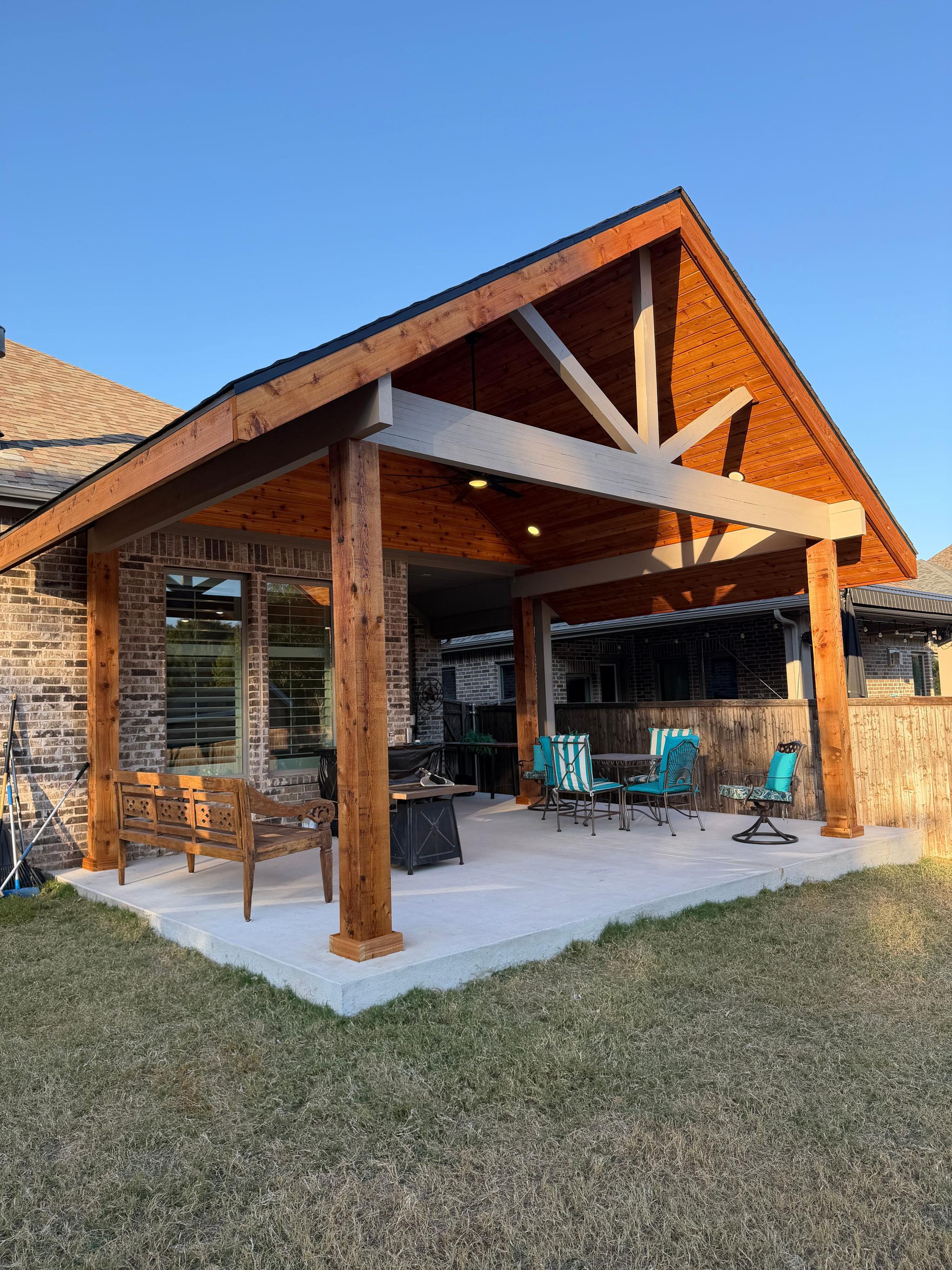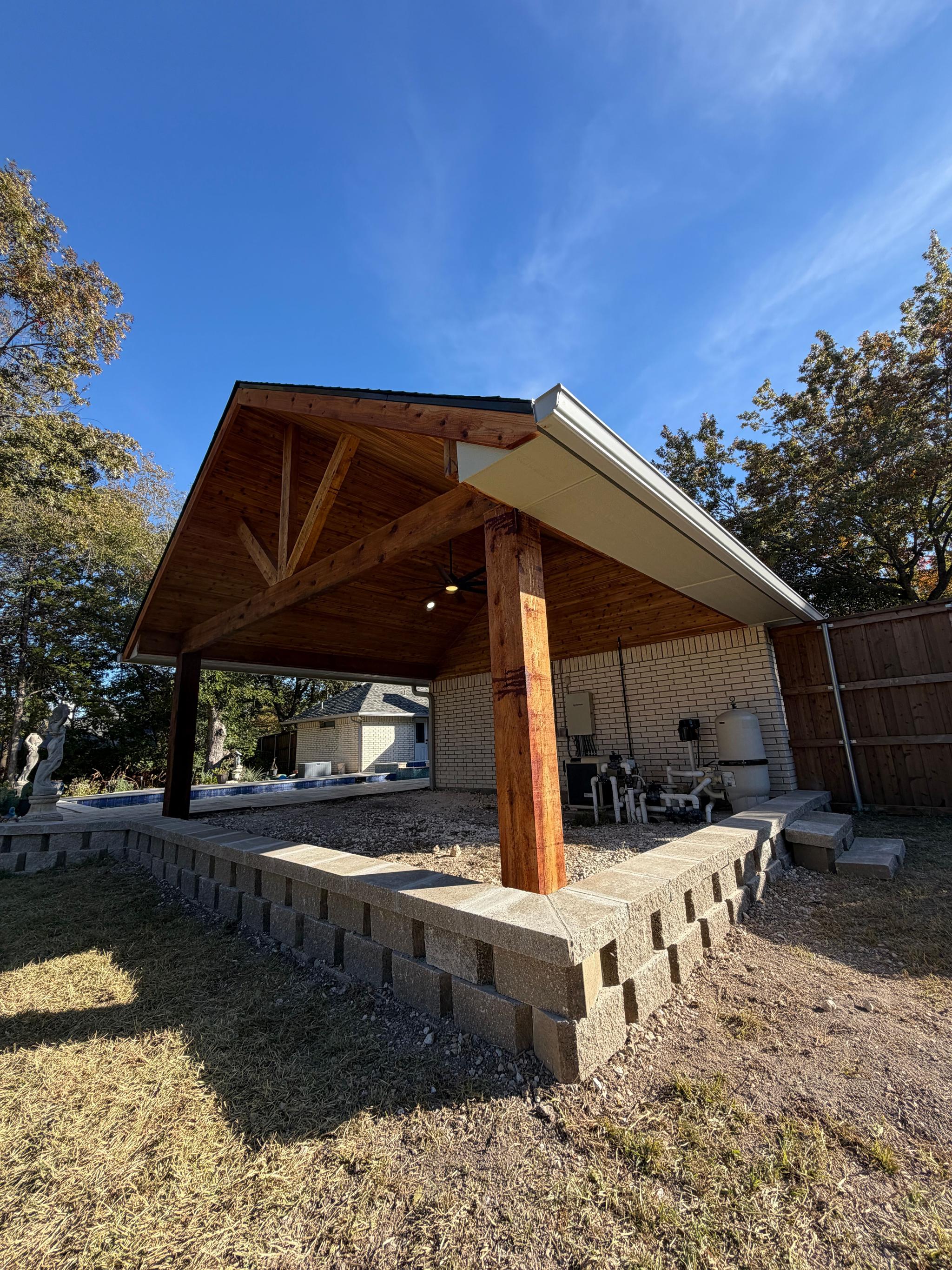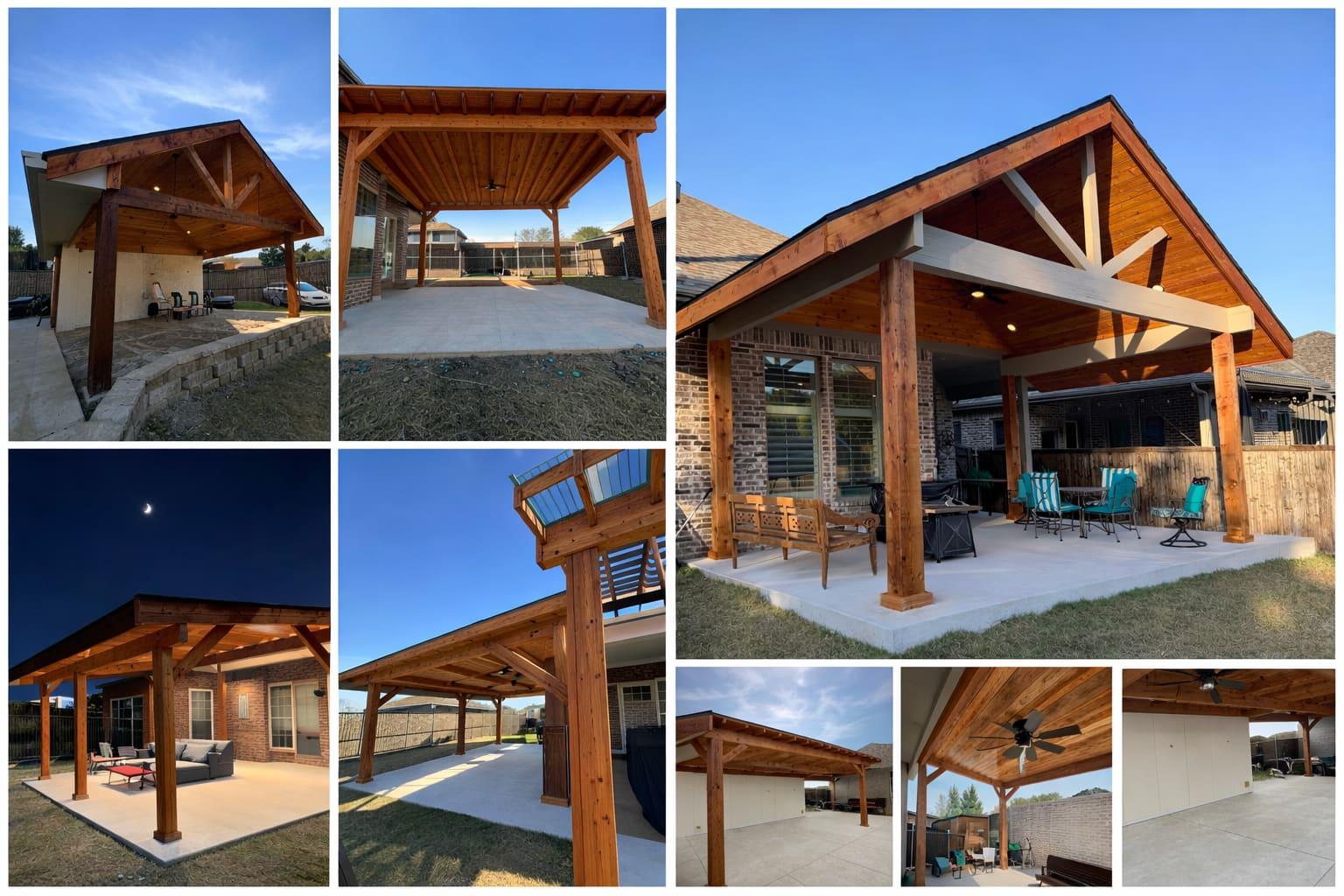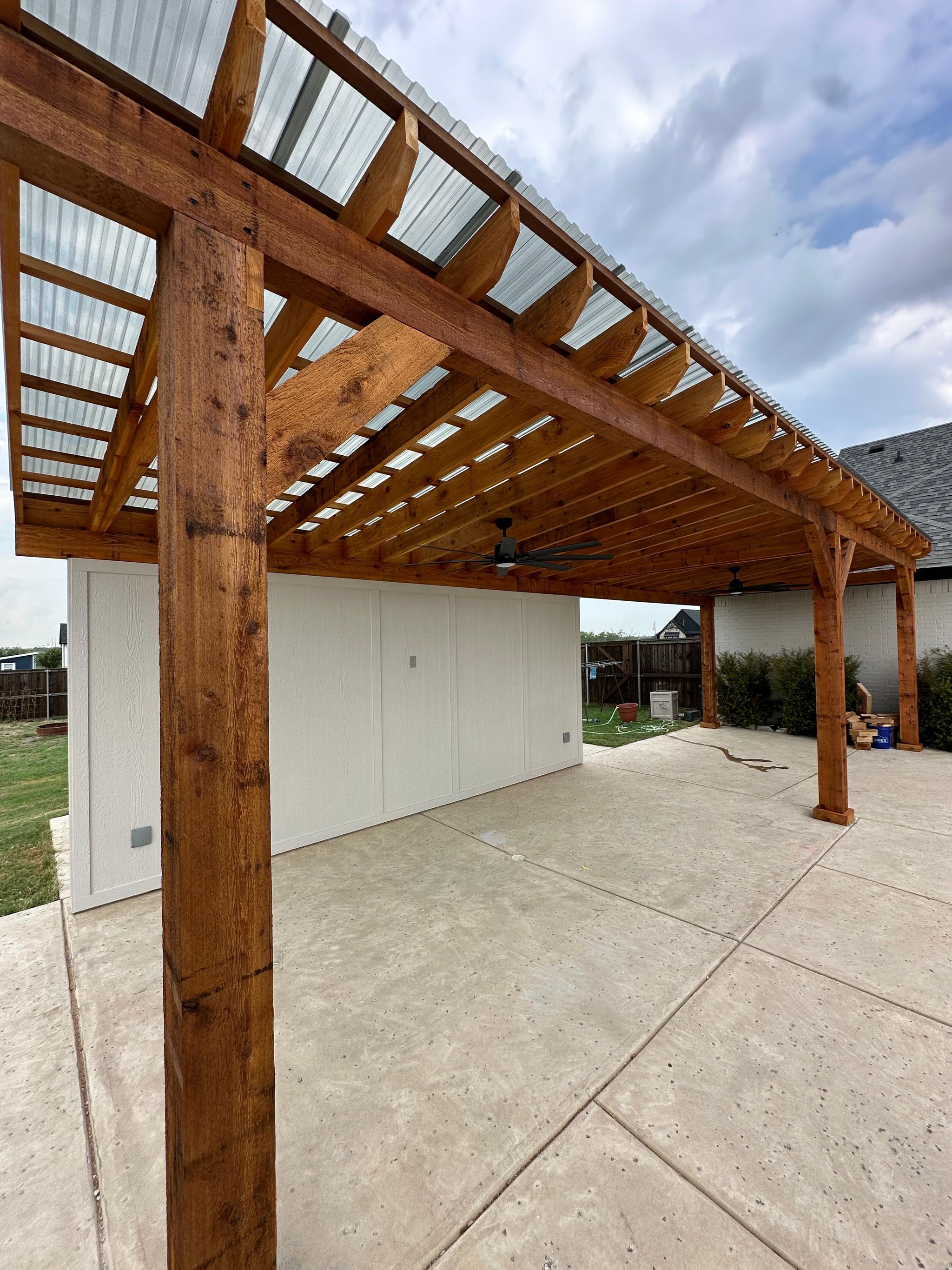
A well-built patio cover should last 25–40 years in North Texas. But "should" and "will" are two different words, and the difference comes down to maintenance. The Texas climate is relentless — UV radiation, 100°F+ summers, sudden hailstorms, occasional ice, and humidity swings that expand and contract wood through thousands of cycles. Even the best cedar structure won't survive that without some attention.
The good news: maintaining a patio cover isn't complicated or expensive. It takes a few hours of work a couple of times a year and a re-staining session every 2–3 years. This guide gives you a practical, season-by-season maintenance plan built specifically for the Dallas-Fort Worth climate — not generic advice written for mild climates where outdoor structures barely get tested.
Why Maintenance Matters in Texas
Before getting into the checklists, it's worth understanding what you're protecting against. Texas puts unique stress on patio cover structures:
UV degradation is the number-one enemy of wood patio covers in DFW. Our 234 sunny days per year deliver an enormous cumulative UV dose. Without a protective stain or sealant, wood fibers break down at the surface, turning gray and eventually becoming soft and splintery. UV also degrades the lignin that holds wood fibers together, weakening the structural integrity over time.
Moisture cycling is the number-two enemy. DFW isn't consistently humid like Houston, but we get intense humidity during spring storms and fall weather patterns, followed by dry stretches. This repeated wet-dry cycling causes wood to expand and contract, which opens cracks, loosens fasteners, and breaks stain bonds. A good sealant slows this cycle dramatically.
Storm damage from hail, wind-driven debris, and heavy rain can cause acute damage that worsens quickly if not addressed. A small crack in a rafter that goes unrepaired becomes a moisture entry point that leads to rot within a season or two.
Insect activity is constant in Texas. Subterranean termites are present throughout DFW and will attack untreated or poorly maintained wood that contacts the ground or retains moisture. Carpenter bees bore into exposed softwood to create nests, leaving distinctive round holes that weaken beams over time.
All of these threats are manageable with basic seasonal maintenance. Here's what to do and when.
Spring Maintenance Checklist
Spring is the most important maintenance window for DFW patio covers. Winter weather (even our mild version of it) can cause issues that need attention before the summer heat bakes them in.
Visual Inspection
Walk around and under your patio cover and look for:
- Cracked or split wood. Check posts, beams, rafters, and fascia boards for new cracks. Small surface checks (shallow cracks along the grain) are normal and cosmetic. Deep cracks that go across the grain or through a structural member need professional evaluation.
- Loose or missing fasteners. Look at all visible screws, bolts, and bracket connections. Thermal cycling over winter can loosen hardware. Tighten anything that's backed out. Replace any missing fasteners with the same size and type.
- Water staining or discoloration. Dark streaks or spots on the ceiling or beams can indicate moisture penetration. Find the source — usually a roof leak, failed caulk at the ledger board, or a gutter issue — and address it before it causes rot.
- Insect activity. Look for small round holes (carpenter bees), mud tubes on posts (subterranean termites), or piles of fine sawdust (wood-boring beetles). Early detection prevents serious damage.
- Ledger board condition. If your cover is attached to your home, inspect the ledger board connection closely. Look for gaps between the ledger and the house wall, deteriorated flashing, or any signs of moisture behind the ledger. This is the most critical structural connection on an attached patio cover.
Spring Cleaning
After the visual inspection, give your cover a thorough cleaning:
- Remove debris. Sweep leaves, pollen, dirt, and cobwebs from the ceiling, beams, and rafters. In DFW, spring pollen accumulation can be heavy — especially from oak trees — and the acidic pollen can etch stain finishes if left sitting.
- Wash with mild soap. Mix a solution of warm water and mild dish soap (no bleach, no pressure washer on wood). Use a soft-bristle brush on a pole to scrub the ceiling and beams. Rinse with a garden hose.
- Clean polycarbonate panels. If your cover has polycarbonate roofing, wash the panels with the same soap-and-water solution and a soft cloth or sponge. Never use abrasive cleaners, Windex, or solvents on polycarbonate — they'll cloud the surface. Rinse thoroughly to avoid soap residue.
- Clean gutters and downspouts. If your patio cover has gutters (attached covers typically share the home's gutter system or have dedicated ones), clear them of leaves and debris. Blocked gutters cause water to back up and overflow onto the cover structure, accelerating moisture damage.
- Check drainage. Run water from a hose along the roof surface and watch where it goes. It should shed cleanly to gutters or off the drip edge without pooling. Pooling water indicates a low spot or a blocked drainage path that needs correction.
Assess Stain Condition
Spring is the time to evaluate whether your cover needs re-staining this year. Pour a small amount of water on a stained wood surface:
- If the water beads up and sits on the surface: Your stain is still performing well. No action needed this year.
- If the water soaks in within 10–15 seconds: The stain is wearing thin. Plan to re-stain this spring or fall (see the Annual Deep Maintenance section).
- If the water soaks in immediately: The stain has failed, and the wood is unprotected. Re-stain as soon as possible.
This simple water test takes 30 seconds and tells you exactly where you stand. Do it on a south- or west-facing surface, as those sides degrade fastest from UV exposure.
Summer Maintenance Tips
Summer in DFW means your patio cover is working its hardest — providing shade, handling thermal expansion, and enduring occasional severe storms. Your maintenance during this season is lighter but important.
UV Protection
If you identified stain degradation during your spring assessment, early summer (before temperatures consistently exceed 95°F) is the last good window to re-stain before fall. Stain products need temperatures between 50°F and 90°F for proper application and curing. Once DFW enters the triple-digit stretch in late June through August, you'll need to wait until October.
Ceiling Fan and Lighting Check
If your patio cover has electrical features:
- Test all switches and outlets. Make sure GFCI outlets are functioning by pressing the test/reset buttons.
- Clean ceiling fan blades. Patio fans accumulate dust, pollen, and grime. Wipe blades with a damp cloth. Check that the fan runs smoothly without wobbling — a wobble indicates a loose blade or an unbalanced assembly.
- Replace burned-out bulbs. Outdoor-rated LED bulbs last 15,000–25,000 hours, but moisture and heat can shorten their lifespan. Replace any that have failed.
- Inspect wiring connections. Look for any exposed wire, damaged conduit, or loose junction box covers. Don't attempt electrical repairs yourself — call a licensed electrician.
Storm Response
When a significant storm passes through (hail, high winds, heavy rain):
- Inspect immediately after the storm. Walk the structure and look for new damage — cracked panels, dented metal, broken rafters, or shifted connections.
- Document damage with photos for insurance purposes before making any temporary repairs.
- Remove large debris (fallen branches, etc.) carefully. Don't climb on the roof unless you're confident in its structural integrity.
- Check polycarbonate panels for cracks. Hailstones can crack polycarbonate even when the panels are rated for impact. A cracked panel will leak and should be replaced.
- Verify ledger attachment. After high winds, confirm that the connection between your patio cover and your home hasn't shifted or loosened.
Fall Preparation
Fall is your second major maintenance window — the last chance to address issues and protect the structure before winter.
Clean and Prepare
- Repeat the spring cleaning routine. Remove accumulated summer debris, wash surfaces, and clean gutters.
- Remove leaves proactively. DFW's fall leaf drop (oak, pecan, and elm trees are everywhere) can clog gutters and pile up on roofing surfaces in days. Clean gutters and roof surfaces every 2–3 weeks through November in heavily treed areas.
- Trim overhanging branches. Cut back any tree branches that overhang your patio cover by at least 3 feet. This reduces leaf accumulation, prevents branches from rubbing against the structure in wind, and eliminates a pathway for insects.
Seal and Stain (If Needed)
If you didn't re-stain in spring, October through mid-November is the ideal window in DFW. Temperatures are moderate (60–80°F), humidity is manageable, and you have enough warm days for proper curing. This timing also gives the fresh stain several months to fully cure before the intense UV of the following summer.
Hardware Inspection
Go around the structure with a socket wrench and check every bolt, lag screw, and bracket. Focus on:
- Post-to-beam connections — these carry the full gravity load
- Rafter-to-beam connections — hurricane ties or structural brackets should be tight
- Ledger board bolts — should not have any play or movement
- Any decorative brackets or knee braces — ornamental, but they still need to be secure
Replace any corroded fasteners with stainless steel or hot-dipped galvanized replacements. Standard zinc-plated hardware corrodes quickly in Texas humidity.
Winter Storm Prep
DFW winters are generally mild, but we get ice events every few years — sometimes severe ones. A little preparation goes a long way.
Before the Season
- Secure loose items. Remove or tie down any lightweight items on or near the patio cover — cushions, decorative elements, hanging plants, unsecured screen panels. Winter wind events in DFW often hit 40–50 mph during cold front passages.
- Inspect roof attachment points. If your cover has a shingle or metal roof, make sure no shingles are lifted, no metal panels are loose, and all flashing is sealed. Winter rain and ice will exploit any gap.
- Check post bases. If your posts sit in post brackets on concrete, verify the bracket bolts are tight and the bases aren't cracked. Ice can collect around post bases and create freeze-thaw damage.
During an Ice Event
- Do not attempt to remove ice from your patio cover. The structure is designed to handle ice and snow loads within normal DFW parameters (typically 10–20 psf depending on code requirements). Climbing on an icy structure is dangerous, and chipping at ice can damage roofing materials and wood surfaces.
- If ice accumulation seems extreme (more than 1–2 inches of solid ice), monitor for any signs of structural distress — cracking sounds, visible deflection (sagging) in beams or rafters, or shifting posts. If you see these signs, stay out from under the structure and call a professional.
- After the ice melts, do a thorough inspection following the spring checklist. Ice events cause more hidden damage than obvious damage — particularly to fastener connections and roofing material.
Annual Deep Maintenance
Once a year (or every 2–3 years for re-staining), commit to a deeper maintenance session. Fall or early spring are the best times.
Re-Staining and Sealing Wood
This is the single most important maintenance task for a wood patio cover in Texas. Here's the process:
- Wash the structure with a wood cleaner or oxalic acid solution to remove gray oxidation, dirt, and mildew. A pump sprayer and soft-bristle brush work well. Let it dry completely — at least 48 hours with no rain.
- Lightly sand any rough areas where the old stain has peeled or the wood has become rough. Use 80–120 grit sandpaper. You don't need to sand the entire structure — just problem spots.
- Apply a high-quality exterior penetrating stain with UV inhibitors. We recommend oil-based semi-transparent stains for cedar and solid or semi-solid stains for pressure-treated pine. Apply with a brush, roller, or airless sprayer according to the manufacturer's directions.
- Apply two coats on horizontal surfaces (top of beams, rafter tops) and exposed end grain, which absorb more moisture. A single coat is typically sufficient on vertical surfaces and the protected ceiling.
- Allow proper curing time — typically 24–48 hours before rain exposure, depending on the product.
Stain products we recommend for DFW conditions:
- TWP (Total Wood Preservative) 100 Series — excellent UV protection, penetrating formula
- Penofin Original — natural oil finish, great for cedar
- Ready Seal — easy application, forgiving to apply, no lap marks
- Cabot Australian Timber Oil — premium option with strong UV inhibitors
Hardware Inspection and Replacement
During your annual deep maintenance:
- Check every structural connection point
- Replace any fastener that shows corrosion, even surface rust
- Verify post brackets and base connections are sound
- Tighten all bolts to snug (don't over-torque, which can split wood)
- Apply a bead of exterior-grade caulk to any gaps between the ledger board and the house wall
Polycarbonate Panel Maintenance
If your cover has polycarbonate panels:
- Wash both sides if accessible (top and bottom) with mild soap and water
- Inspect for cracks, yellowing, or cloudiness
- Check that rubber gaskets or sealant strips between panels are intact
- Replace any panels that have cracked or significantly yellowed — they've lost their UV protection capacity and will degrade rapidly from that point
Concrete Pad Under the Cover
While you're doing annual maintenance on the cover, take a look at the concrete underneath:
- Seal exposed concrete every 2–3 years to prevent moisture absorption and surface deterioration
- Address any cracks wider than 1/4 inch, which can allow moisture to reach post footings
- Re-apply stamped concrete sealer if the surface has lost its sheen or color vibrancy. Read more about maintaining concrete surfaces in our concrete services section
When to Call a Professional
Most patio cover maintenance is DIY-friendly. But some situations call for professional help:
- Structural damage. A cracked beam, a leaning post, a separated ledger connection — these are load-bearing concerns that need evaluation by someone who understands structural forces. Don't guess.
- Active termite infestation. If you find mud tubes or active termite activity on your patio cover, call a licensed pest control company immediately. Then call your builder to assess the structural impact.
- Roof leaks you can't trace. Water staining on the ceiling with no obvious source usually means a flashing failure or a leak at the ledger board connection. These repairs require roofing experience to do correctly.
- Electrical issues. Any problem with wiring, outlets, or light fixtures should be handled by a licensed electrician. Outdoor electrical in Texas weather is not a DIY project.
- Major re-staining of high or complex structures. If your patio cover has a 12-foot ceiling or complex geometry, professional staining ensures even coverage and proper access without risking injury.
- Post-storm assessment. If a major hail or wind event hits and you're not sure whether your cover sustained structural damage, get a professional inspection. It's worth the cost of a service call for peace of mind.
Structure1's 2-Year Workmanship Warranty
Every patio cover we build at Structure1 Construction comes with a 2-year workmanship warranty. Here's what that means in practice:
What's covered:
- Any defect in construction or installation attributable to our workmanship
- Structural connections — ledger, posts, beams, rafters, hardware
- Roofing installation — shingles, metal panels, polycarbonate panels as installed
- Electrical installation — wiring, fixtures, outlets as originally installed
- Stain application — if we stained the structure, we warrant against premature peeling, flaking, or failure within the warranty period when maintained according to our care instructions
What's not covered:
- Normal weathering and UV fading of stain (this is expected and requires periodic re-application as described above)
- Damage from severe storms, hail, or acts of nature
- Damage from modifications made by others after our installation
- Wear on homeowner-supplied materials or fixtures
- Issues arising from failure to maintain the structure according to our provided care guide
How to use it: If you notice a workmanship issue within 2 years of your project completion, call us at (580) 665-2758 or email through our website. We'll schedule an inspection, and if it's a warranted issue, we'll repair it at no cost to you.
This warranty reflects our confidence in how we build. We use quality materials, proper structural engineering, and experienced carpenters on every project. Read more about our material choices and why they matter.
Maintenance Schedule Summary
Here's a quick-reference table for your annual maintenance calendar:
| Season | Task | Time Required | |---|---|---| | Spring | Visual inspection (structure, fasteners, insects) | 30–45 minutes | | Spring | Full cleaning (wash, gutters, polycarbonate) | 2–3 hours | | Spring | Water bead test on stain | 5 minutes | | Summer | Fan and lighting check | 15–20 minutes | | Summer | Post-storm inspection (as needed) | 20–30 minutes | | Fall | Second full cleaning | 2–3 hours | | Fall | Hardware inspection and tightening | 45–60 minutes | | Fall | Trim overhanging branches | 1–2 hours | | Fall/Spring | Re-stain (every 2–3 years) | Full day (prep + application) | | Winter | Pre-ice-event prep | 30 minutes |
Total annual time commitment: Approximately 8–12 hours per year, plus a full day every 2–3 years for re-staining.
That's a modest commitment to protect a structure you've invested in — one that adds real value to your home. Proper maintenance is what separates a patio cover that looks tired and neglected after 10 years from one that still looks beautiful after 30.
For more on choosing the right structure and materials in the first place, read our guide on the types of patio covers and our material comparison for Texas weather. And when you're ready to build a patio cover that's designed to last in the DFW climate, get a free estimate from Structure1 Construction — or call us directly at (580) 665-2758.